
A Sulphur Recovery Unit (SRU) is a critical processing unit in oil refineries and natural gas plants that converts hazardous hydrogen sulfide (H₂S) from acid gas streams into elemental sulphur, preventing toxic emissions while meeting environmental regulations. It primarily uses the modified Claus process to achieve high recovery rates, typically 95-98% or more with tail gas treatment.

Put simply: A Sulphur Recovery Unit (SRU) safely transforms toxic H₂S, a byproduct of crude oil processing and gas sweetening, into usable elemental sulphur through thermal and catalytic stages, reducing emissions and enabling compliance with strict sulphur limits in fuels and exhaust gases.
What is a Sulphur Recovery Unit (SRU)? A Simple Answer Before We Go Deeper
In my 15+ years working as a refinery inspector and process engineer, I’ve seen the Sulphur Recovery Unit (SRU) as the environmental backbone of any sour crude or high-sulphur gas operation. The SRU takes acid gas rich in H₂S—stripped from amine treaters or sour water strippers—and converts it into elemental sulphur via the Claus process.
This isn’t just about compliance; it’s about turning a dangerous waste product into a valuable commodity used for sulphuric acid, fertilizers, and more. Without an efficient SRU, a refinery couldn’t process high-sulphur crudes economically or meet regulations like those limiting SO₂ emissions.
Why Does a Sulphur Recovery Unit Matter in a Refinery?
Refineries process crude oils containing sulphur compounds that end up as H₂S in various streams. Releasing this H₂S directly would create severe safety, health, and environmental hazards. The SRU is required to recover sulphur, minimize emissions, and support the production of low-sulphur fuels demanded by global standards.
In practice, I’ve inspected units where poor SRU performance led to increased flaring or off-spec products, costing operators significantly in downtime and penalties. A well-run SRU allows refineries to handle sour feeds profitably while protecting downstream equipment from corrosion and ensuring OSHA PSM compliance.
One common misconception is that the SRU is “just a burner and some reactors.” In reality, it’s a finely balanced system where stoichiometry, temperature control, and catalyst performance determine success. Many newcomers underestimate the impact of feed variations from amine units or sour water strippers.
Practical real-world insight 1: Acid gas composition fluctuates daily. In one refinery I worked at, H₂S content ranged from 40-90%, forcing operators to adjust air ratios constantly to maintain the ideal 2:1 H₂S:SO₂ ratio for maximum conversion.
How Does a Sulphur Recovery Unit Work? — Step by Step
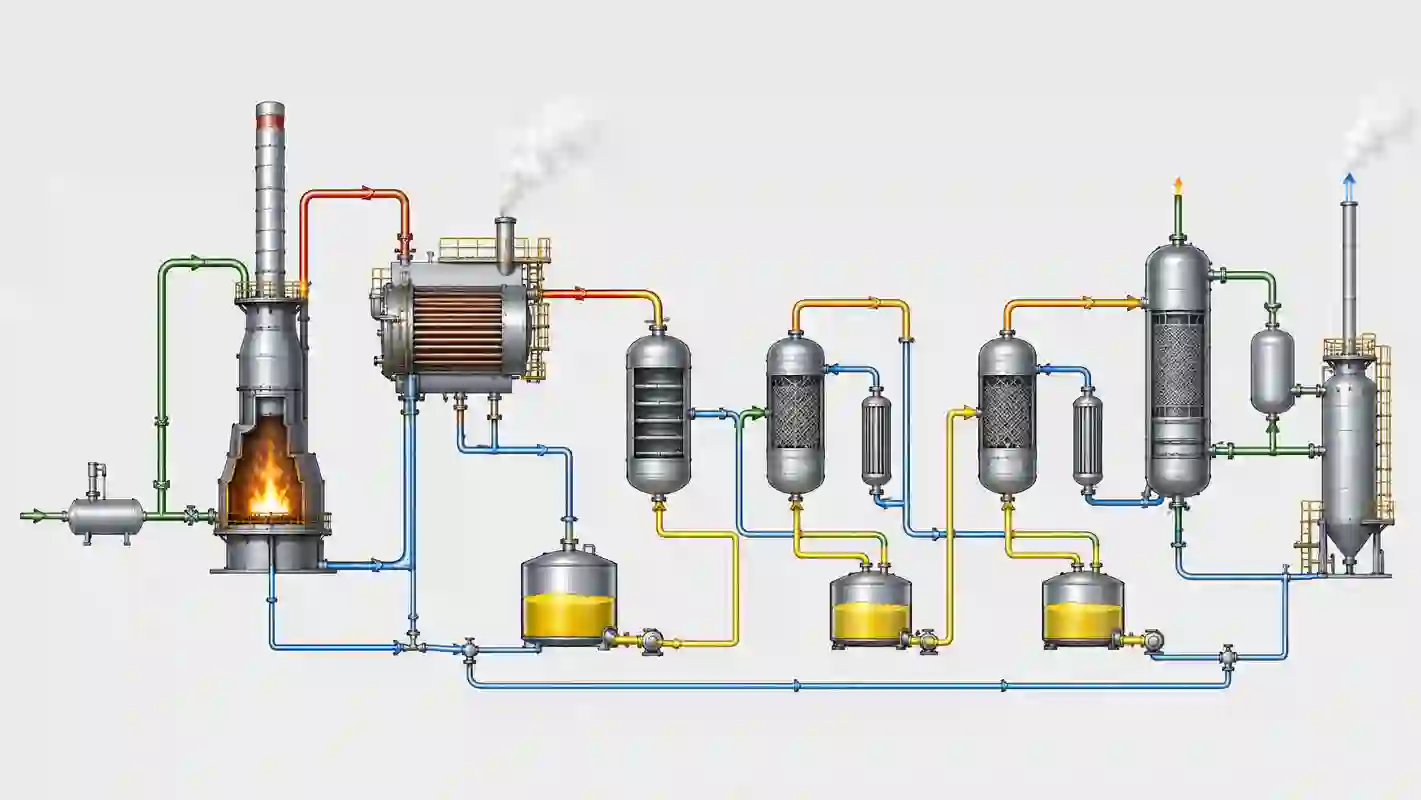
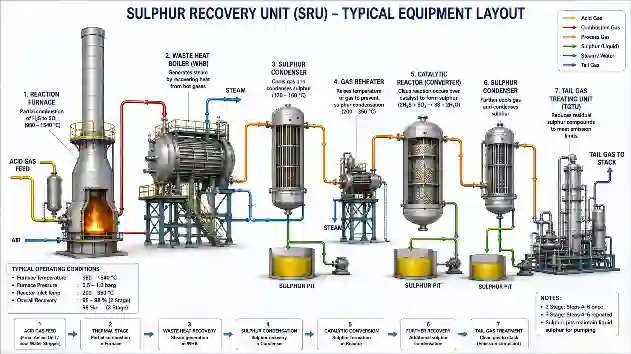
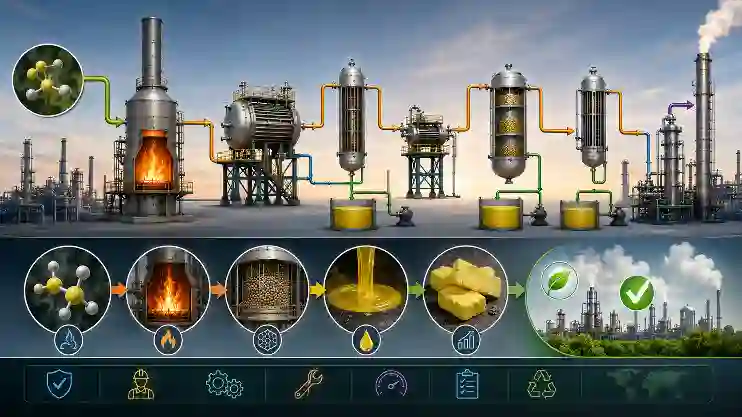
The SRU operates on the modified Claus process, combining thermal and catalytic stages. Here’s how it typically works in a standard two- or three-stage configuration:
- Acid Gas Feed and Combustion (Thermal Stage): Acid gas (mainly H₂S and CO₂) mixes with controlled air and burns in the reaction furnace. About one-third of the H₂S combusts to SO₂ at 980–1,540°C (1,800–2,800°F). The remaining H₂S reacts thermally with SO₂ to form sulphur vapour. Pressures stay low, around 0.5–1 bar gauge.
- Waste Heat Recovery: Hot gases cool in a waste heat boiler, generating high- or medium-pressure steam (typically up to 600 psig). This recovers valuable energy while cooling the gas for sulphur condensation.
- First Sulphur Condensation: Gases cool further in a sulphur condenser, condensing liquid sulphur (around 120–160°C). Sulphur drains to a pit via seal legs.
- Reheating: Remaining gas reheats (using steam or hot gas bypass) to 200–350°C to prevent sulphur dew point issues before the next reactor.
- Catalytic Conversion: Gas passes over alumina or titania catalyst beds where the Claus reaction (2H₂S + SO₂ → 3S + 2H₂O) continues. Each stage recovers additional sulphur.
- Subsequent Condensation and Stages: Repeat reheating, reaction, and condensation for second (and third) stages. A typical two-stage unit achieves 95–97% recovery; three stages reach 98%+.
- Tail Gas Handling: Unreacted gases go to a tail gas treating unit (TGTU) for further recovery or incineration to meet emission limits.
Inspection tip: Always check refractory condition in the reaction furnace and ferrule alignment in the waste heat boiler tubes during turnarounds—these see the highest thermal stress.
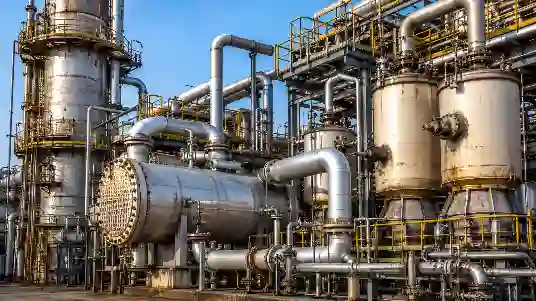
Key Equipment Inside a Sulphur Recovery Unit (SRU)
Reaction Furnace and Burner
This is the heart of the thermal stage. It operates at high temperatures with sub-stoichiometric air. What inspectors commonly find is refractory spalling or hot spots due to flame impingement if burner alignment drifts.
Waste Heat Boiler (WHB)
Recovers heat from furnace effluent. Tubes face sulphidation and thermal fatigue. Typical steam generation: high-pressure from furnace gases.
Sulphur Condensers
Shell-and-tube exchangers that cool process gas below the sulphur dew point. They operate at 120–160°C outlet temperatures.
Catalytic Reactors (Converters)
Contain beds of activated alumina or TiO₂ catalyst. Operate at 200–350°C inlet. Catalyst deactivates over time from sulphation or fouling.
Reheaters and Piping
Steam or gas reheaters maintain temperatures above dew point. Sulphur lines require tracing and insulation to prevent solidification.
Practical real-world insight 2: In hot climates like many Indian or Middle Eastern refineries, ambient temperatures affect condenser performance. I’ve seen operators use air coolers or adjust steam tracing to maintain proper sulphur drainage.
What Products or Outputs Does a Sulphur Recovery Unit Produce?
Elemental Sulphur
The primary product—bright yellow liquid sulphur that solidifies into blocks or prills. It meets commercial specs after degassing to remove dissolved H₂S.
Steam
Significant byproduct from waste heat boilers and condensers. This offsets energy costs across the refinery.
Tail Gas
Treated in TGTU or sent to incineration. Contains residual H₂S, SO₂, and other compounds at very low levels.
Summary Table:
| Output | Typical Specification | Use Case |
|---|---|---|
| Elemental Sulphur | >99.5% purity, low H₂S | Sulphuric acid, fertilizers |
| Steam | 10–40 bar, superheated | Refinery utilities |
| Treated Tail Gas | <10-250 ppm total sulphur | Stack emissions |

Common Problems and Inspection Concerns
Corrosion and Sulphidation
High-temperature sulphidation occurs in furnace and piping. In practice, carbon steel suffers above 260°C in H₂S service (per API 571). Use UT thickness monitoring and consider alloy upgrades.
Catalyst Deactivation
Fouling from hydrocarbons, soot, or salts reduces activity. Inspect via pressure drop trends and sample analysis. Relevant to API 510 vessel inspections.
Plugging in Condensers and Lines
Sulphur solidification or ammonium salts plug tubes and demisters. Use IR thermography to detect cold spots indicating blockages.
Refractory Failure
Thermal cycling during startups damages furnace lining. Visual and boroscope inspections are essential during shutdowns.
Practical real-world insight 3: Low H₂S concentration in feed (common with high CO₂) promotes COS/CS₂ formation, lowering recovery. Adjust burner operation or add oxygen enrichment where possible.

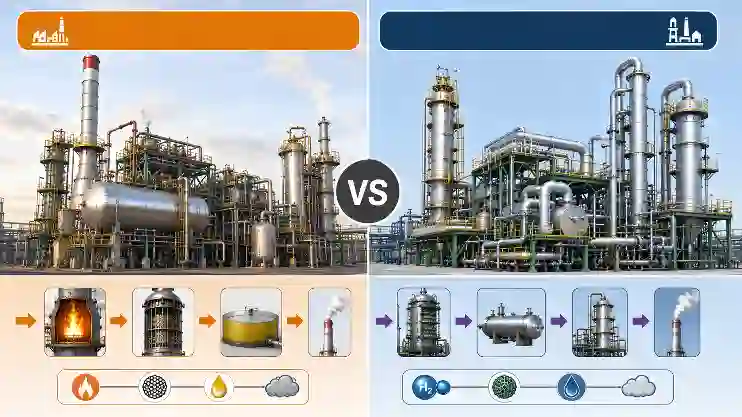
Sulphur Recovery Unit (SRU) vs Tail Gas Treating Unit (TGTU) — What is the Difference?
The SRU handles primary recovery via Claus chemistry. The TGTU polishes the SRU tail gas for ultra-high overall recovery (99%+).
Comparison Table:
| Aspect | SRU (Claus) | TGTU |
|---|---|---|
| Recovery Efficiency | 95–98% | Boosts to 99–99.9% |
| Main Process | Thermal + Catalytic Claus | Hydrogenation/Hydrolysis + Amine |
| Key Equipment | Furnace, Reactors, Condensers | Reactor, Absorber, Stripper |
| Operating Temp | 200–1,500°C | Lower temps post-hydrogenation |
| Typical Use | Base recovery | Emission compliance |
Conclusion
A well-designed and maintained Sulphur Recovery Unit (SRU) is essential for safe, compliant, and profitable refinery operations. From my field experience, the units that run best are those with diligent monitoring, proper feed conditioning, and regular inspections following API 510, API 653, and API 571 guidelines.
Focus on stoichiometry, temperature control, and proactive corrosion management—these make the difference between reliable 98%+ recovery and constant headaches. For new engineers walking the unit for the first time, remember: it’s all about balance and attention to detail in every stage.
Frequently Asked Questions
What is an SRU unit in a refinery? A Sulphur Recovery Unit (SRU) converts H₂S from acid gas into elemental sulphur using the Claus process. It is a key environmental and processing unit in refineries handling sour crudes.
How does a Sulphur Recovery Unit work? It partially combusts H₂S to SO₂ in a furnace, then reacts the mixture over catalysts to produce sulphur, with condensation after each stage. Multiple stages maximize recovery.
Why is a Sulphur Recovery Unit required? To meet environmental regulations, prevent toxic H₂S emissions, and comply with low-sulphur fuel standards while recovering a valuable byproduct.
What is the typical sulphur recovery efficiency of an SRU? A two-stage Claus SRU achieves 95–97%; three stages reach 97–98%. Tail gas treatment pushes overall recovery above 99%.
What are common inspection methods for SRU equipment? Visual inspection, ultrasonic thickness (UT), radiography (RT), ACFM for cracks, and IR thermography for hot/cold spots. Follow API 510 and 571 recommendations.
What causes corrosion in Sulphur Recovery Units? High-temperature sulphidation, acid dew point corrosion during shutdowns, and ammonium salt deposition. Proper material selection and dry-out procedures help mitigate it.
What is the difference between sulphur and sulfur recovery? They refer to the same process (regional spelling variation). Recovery means converting H₂S to elemental S.
How often should SRU catalysts be replaced? Typically every 3–5 years, depending on feed quality, operating conditions, and pressure drop trends. Regular performance monitoring is key.
Suggested Posts
What Is Alkylation Used For? The Process in Petroleum Refining
Catalytic Reforming Process in Refinery Explained
What Is a Hydrotreating Unit? Process, Working and Purpose Explained
DHT Unit in Refinery: What It Is, How It Works, and Why It Matters
About The Author
