
Introduction:
Learn what rubber lining is, which rubber lining material is best, the hardness of rubber lining, its purpose in tanks and piping, surface preparation, inspection, and why industries depend on it for corrosion protection.
When metal tanks and pipelines are exposed to chemicals, acids, abrasive slurry, or saltwater day after day, something has to stand between the metal and the damage. That something is rubber lining — one of the most reliable, time-tested protection systems in industrial engineering.
This guide covers everything you need to know about rubber lining for tanks and piping: what it is, what it is made from, how it is applied, how its hardness is measured, and why so many industries depend on it to keep their equipment running safely and profitably.
What Is Rubber Lining?
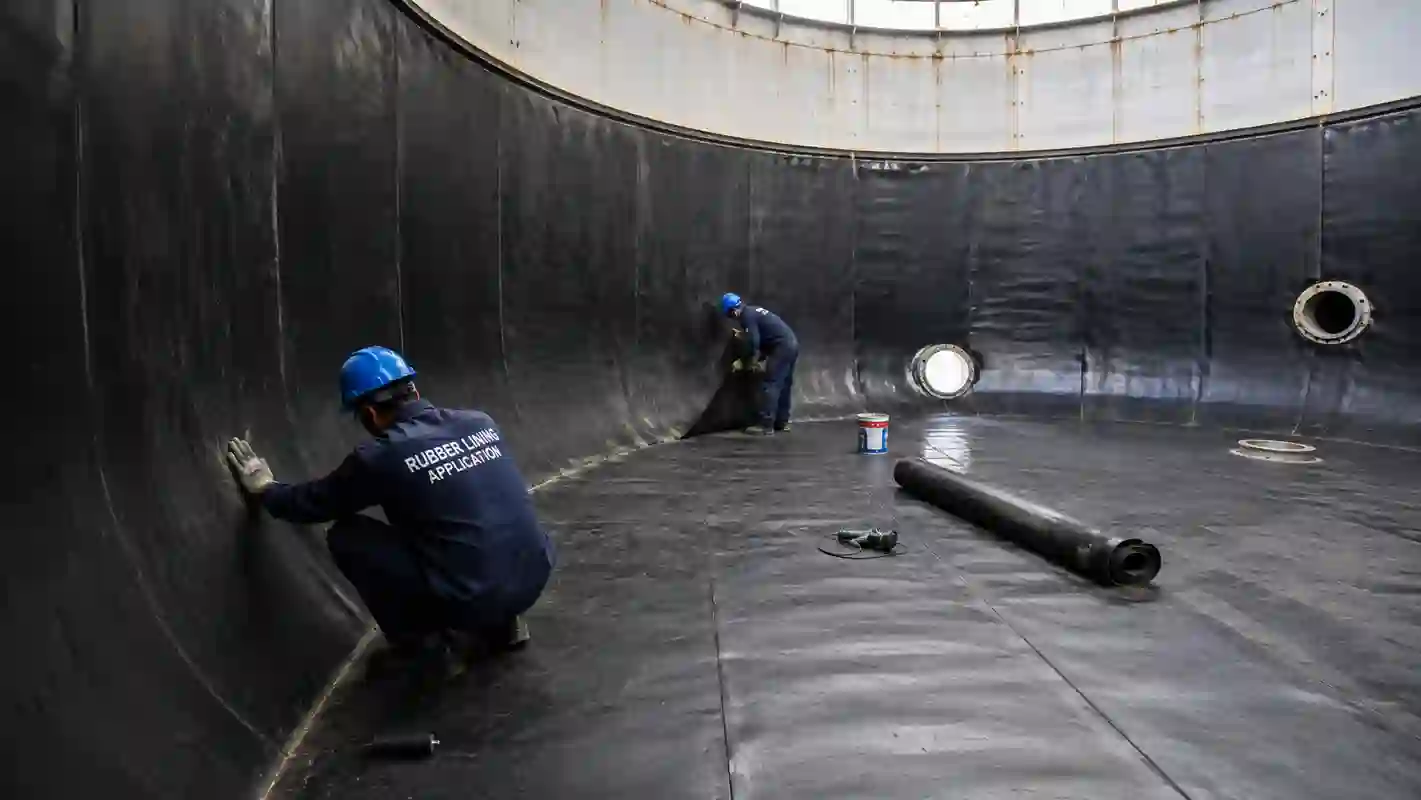
Rubber lining is a protective layer of specially compounded rubber bonded to the interior or exterior surface of metal equipment — including storage tanks, process vessels, pipelines, bends, reducers, and fittings. Its job is to act as a physical barrier between the metal substrate and whatever is flowing or stored inside.
Think of it as a thick, tough jacket wrapped around the metal. The metal underneath provides structural strength, while the rubber lining absorbs chemical attack, handles abrasive wear, and prevents corrosion from ever reaching the steel.
In industrial environments, rubber lining is not a cosmetic finish — it is a critical engineering decision that directly affects how long a tank or pipeline will last, how safe the plant will be, and how much money will be spent on maintenance and replacement over the equipment’s lifetime.
What Is the Purpose of Rubber Lining?
The primary purpose of rubber lining is protection. But that one word covers a wide range of specific functions depending on the application.
Corrosion Protection
Steel corrodes when it comes into contact with water, acids, alkalis, and many process chemicals. Even stainless steel can suffer from specific types of chemical attack. Rubber lining eliminates this risk by creating a chemically inert barrier that most aggressive substances cannot penetrate.
Abrasion Resistance
In mining, mineral processing, and slurry handling, pipes and tanks are constantly being hammered by abrasive particles travelling at high velocity. Rubber — particularly soft natural rubber — absorbs this energy and wears far more slowly than bare steel. This is why rubber-lined pipes are standard in ore slurry pipelines, dredging applications, and sand and gravel handling systems.
Chemical Resistance
Different rubber compounds offer resistance to specific chemicals. A properly selected rubber lining can handle concentrated sulphuric acid, hydrochloric acid, sodium hydroxide, chlorine solutions, and many other aggressive process fluids that would destroy unprotected steel within weeks or months.
Leak Prevention
A continuous, well-bonded rubber lining seals the metal surface and eliminates the micro-cracks and surface defects through which corrosive fluids can penetrate. This significantly reduces the risk of through-wall corrosion and unplanned leakage.
Extended Equipment Life and Reduced Maintenance Cost
By protecting the metal from corrosion and wear, rubber lining extends the operational life of tanks and pipelines by many years — often doubling or tripling the original service life. This reduces the frequency of equipment replacement and dramatically lowers the total cost of ownership.
Is Rubber Used in Tanks?
Yes — rubber lining is extremely common in industrial tanks across a wide range of industries. Storage tanks, reaction vessels, mixing tanks, and transport tanks are all regularly rubber lined when their contents would otherwise attack the metal.
Some of the most common applications of rubber lining in tanks include:
- Acid storage tanks in chemical plants storing sulphuric acid, hydrochloric acid, or phosphoric acid
- Electrolytic cells in electroplating and metal refining, where rubber provides electrical insulation as well as chemical resistance
- Pulp and paper digesters, where wood chips are cooked in hot caustic or acidic solutions
- Brine tanks in water treatment and desalination plants
- Slurry tanks and sumps in mining and mineral processing
- Fertiliser storage tanks handling ammonium nitrate, urea, and phosphate solutions
- Effluent and wastewater tanks in industrial and municipal treatment plants
In all of these applications, the rubber lining is not optional — it is the difference between a tank that lasts decades and one that fails within a few years.
Rubber Lining Material: Which Types Are Used?
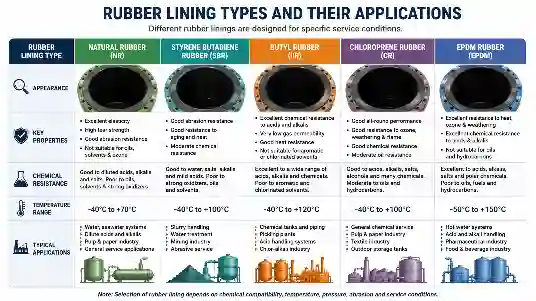
The choice of rubber lining material is one of the most critical decisions in any tank or pipeline lining project. There is no single rubber that suits all applications — each compound has its own strengths, limitations, and ideal operating conditions.
Natural Rubber (NR)
Natural rubber is derived from the latex of the Hevea brasiliensis tree. It has outstanding abrasion resistance — better than most synthetic rubbers — and good resilience, meaning it recovers its shape after being compressed or impacted. This makes it the preferred choice for slurry pipelines, pump liners, and anywhere that abrasive particles are the primary threat.
Natural rubber has good resistance to dilute acids and alkalis but is not suitable for oils, petroleum products, or concentrated oxidising acids. Its maximum operating temperature is typically around 70–80°C.
Neoprene Rubber (CR — Chloroprene Rubber)
Neoprene offers a useful combination of moderate oil resistance, good weather and ozone resistance, and reasonable chemical resistance. It performs well in outdoor environments and is often used for tank exteriors, pipe wrapping, and applications where weathering resistance is needed alongside moderate chemical exposure.
EPDM Rubber (Ethylene Propylene Diene Monomer)
EPDM is one of the best choices for resistance to acids, alkalis, hot water, and steam. It handles temperatures up to around 120–150°C and performs well in oxidising acid environments. EPDM is widely used in water treatment, chemical processing, and any application involving elevated temperatures.
Butyl Rubber (IIR — Isobutylene Isoprene Rubber)
Butyl rubber offers excellent resistance to a wide range of chemicals, particularly strong acids and polar solvents. It has very low gas permeability, making it ideal for applications where vapour transmission through the lining must be minimised. Butyl rubber is commonly used in chemical storage tanks and reaction vessels.
Hypalon (CSPE — Chlorosulphonated Polyethylene)
Hypalon provides excellent resistance to oxidising acids — including concentrated sulphuric and nitric acids — as well as good resistance to ozone, UV light, and weathering. It is used in the most chemically aggressive environments where other rubbers would be attacked.
Hard Rubber (Ebonite)
Hard rubber — also called ebonite — is natural or synthetic rubber that has been vulcanised with a very high proportion of sulphur, producing a rigid, glassy material rather than an elastic one. Hard rubber linings offer excellent resistance to dilute and moderately concentrated sulphuric acid and are widely used in battery cases, chemical tanks, and electroplating equipment. Hard rubber is brittle compared to soft rubber and cannot be used where mechanical impact or flexing is expected.
Rubber Lining Material Selection Summary
| Rubber Type | Best For | Temperature Limit | Key Limitation |
| Natural Rubber | Abrasion, slurry | ~80°C | Not oil resistant |
| Neoprene | Weather, mild chemicals | ~100°C | Moderate chemical resistance only |
| EPDM | Acids, alkalis, hot water | ~150°C | Poor oil resistance |
| Butyl | Strong chemicals, low permeability | ~120°C | Poor abrasion resistance |
| Hypalon | Oxidising acids, UV | ~130°C | Higher cost |
| Hard Rubber | Dilute sulphuric acid, electroplating | ~70°C | Brittle, no flex |
Always confirm rubber selection against the specific chemicals, temperatures, and pressures in your application using a chemical resistance chart and the rubber supplier’s technical data.
Which Lining Fabric Is Best?
In rubber lining, fabric reinforcement is sometimes incorporated into the rubber sheet to improve its mechanical strength, dimensional stability, and resistance to tearing during installation and service. The question of which lining fabric is best depends entirely on the application.
Woven Cotton or Polyester Fabric
Fabric-backed rubber sheets — where one or both faces of the rubber sheet are bonded to a woven textile fabric — are widely used for tank lining. The fabric layer makes the sheet easier to handle, reduces stretching during application, and improves adhesion to the metal substrate in some bonding systems. Cotton-backed sheets have long been the traditional choice, while polyester-backed sheets offer better resistance to moisture absorption and microbial attack.
Fibre-Reinforced Hard Rubber
For hard rubber linings, fibre reinforcement improves impact resistance and reduces the risk of cracking. Glass fibre reinforcement is sometimes used for this purpose.
Unreinforced Soft Rubber Sheet
For many soft rubber lining applications — particularly where maximum elasticity and conformability to complex shapes is needed — unreinforced rubber sheet is preferred. Unreinforced sheets can stretch and conform around bends, nozzles, and flanges more easily than fabric-backed sheets.
In most industrial tank and pipe lining projects, the rubber compound itself is the primary selection criterion, and the decision on fabric backing is secondary — driven by the installer’s preference and the complexity of the surface being lined.
Is Rubber a Type of PVC?
No — rubber and PVC (polyvinyl chloride) are completely different materials, and this is an important distinction when selecting tank or pipe lining systems.
Natural rubber is an organic polymer derived from plant latex, with a chemical structure based on isoprene (C₅H₈) repeat units. Synthetic rubbers such as EPDM, neoprene, and butyl are also elastomeric polymers, meaning they are highly flexible and elastic at room temperature.
PVC is a thermoplastic polymer — it is rigid at room temperature but softens and can be moulded when heated. Plasticised PVC (with added plasticisers) can be made flexible, but it is fundamentally different in chemistry, mechanical properties, and performance from rubber.
In tank lining applications, both rubber and PVC-based systems are used, but they serve different needs:
- Rubber linings are generally preferred for abrasion resistance, high-flexibility applications, and where rubber’s unique elastic energy absorption is needed
- PVC linings (and other thermoplastic linings such as PP, HDPE, and PVDF) are often preferred for certain chemical environments, particularly where pure chemical resistance with smooth surfaces is the priority
When a specification calls for rubber lining, PVC cannot simply be substituted — the two materials have different bonding systems, application methods, inspection procedures, and performance characteristics.
What Is the Hardness of Rubber Lining?
Hardness is one of the most important quality parameters for rubber lining. It is measured using a Shore durometer — a standardised instrument that measures how deeply a defined indenter penetrates the rubber surface under a specified load.

The two most common Shore scales used for rubber lining are:
- Shore A — used for soft and medium rubbers
- Shore D — used for harder rubbers and hard rubber (ebonite) linings
Typical Hardness Ranges for Rubber Lining
| Rubber Lining Type | Shore Hardness | Typical Applications |
| Soft natural rubber | 40–60 Shore A | Slurry pipes, abrasion service |
| Medium hard rubber | 60–80 Shore A | General chemical tanks |
| Semi-hard rubber | 80–95 Shore A | Chemical vessels, mixed service |
| Hard rubber (ebonite) | 70–85 Shore D | Acid tanks, electroplating |
Why Hardness Matters
The hardness of a rubber lining affects how it performs in service:
- Softer rubbers (low Shore A) are better at absorbing impact and abrasion energy. When an abrasive particle strikes soft rubber, the rubber deforms elastically and the particle bounces off, causing less wear than it would on hard rubber or bare metal.
- Harder rubbers are better at resisting penetration by chemicals and provide a smoother surface, which is important in some chemical process applications.
- Hard rubber (ebonite) provides exceptional chemical resistance and a glass-smooth surface but is brittle and cannot tolerate mechanical shock or flexing.
Hardness Testing in the Field
During rubber lining inspection, hardness is checked using a portable Shore durometer pressed firmly and perpendicularly onto the rubber surface. Multiple readings are taken at different locations to verify uniformity. If the rubber has been under-vulcanised, it will read softer than specified. If it has been over-vulcanised or scorched, it may read harder than specified. Both conditions are cause for rejection and investigation.
Surface Preparation for Rubber Lining
No matter how good the rubber compound is, the lining will fail prematurely if the surface preparation is inadequate. Surface preparation is the foundation of every successful rubber lining job.
Step 1 — Cleaning and Degreasing
Before any abrasive blasting begins, the metal surface must be cleaned to remove oil, grease, wax, and other hydrocarbon contamination. This is typically done using solvent wiping, hot water washing with detergent, or steam cleaning. If oil contamination is not removed before blasting, the blasting process can drive it into the surface profile, preventing good rubber adhesion.
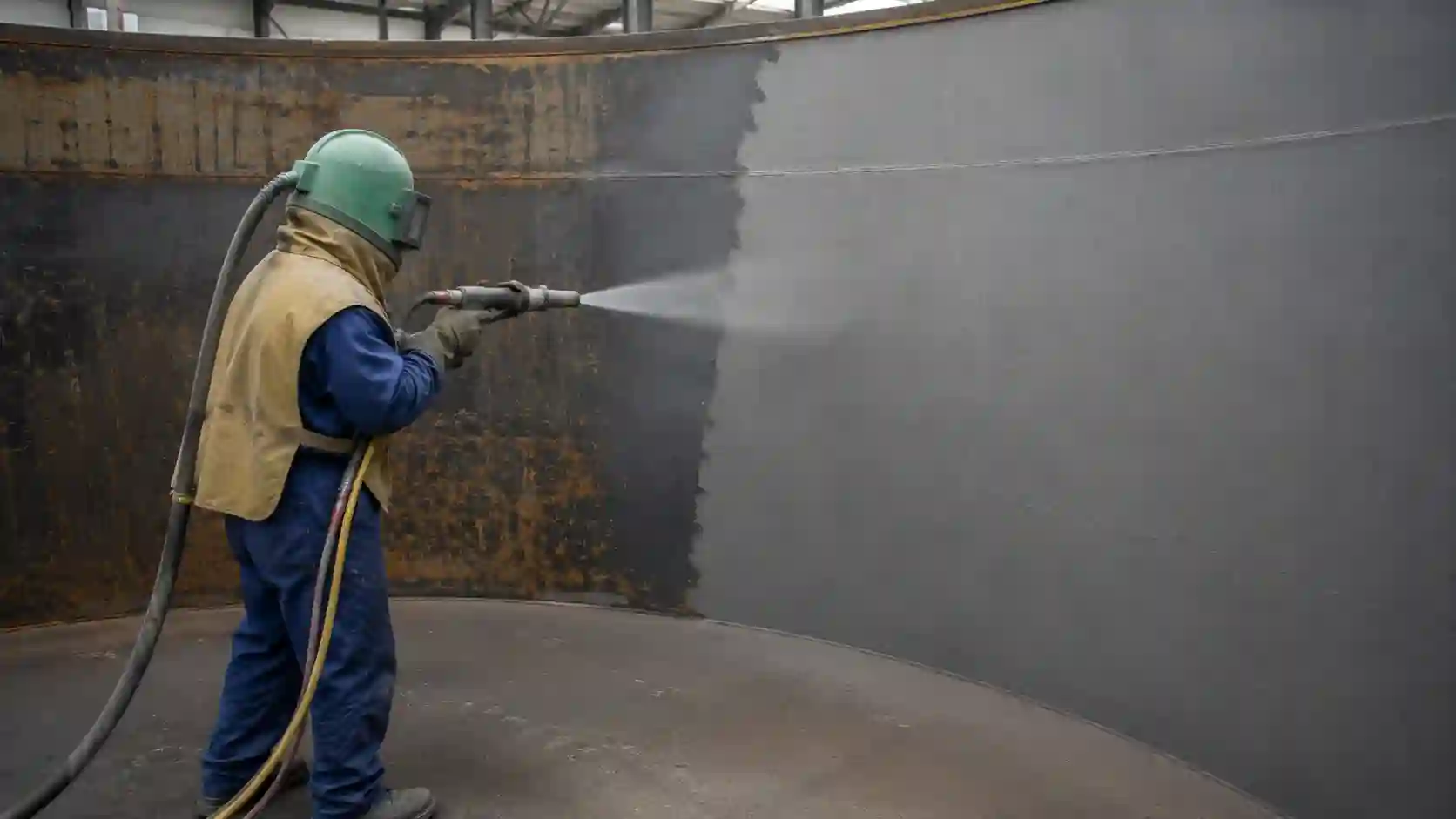
Step 2 — Abrasive Blasting to SA 2.5
The industry standard surface preparation requirement for rubber lining is abrasive blasting to SA 2.5 (near-white metal blast cleaning) in accordance with ISO 8501-1, or the equivalent SSPC-SP 10 standard.
At SA 2.5, the surface is free from visible oil, grease, dirt, mill scale, rust, coatings, and other contaminants. Only light staining — slight shadows, streaks, or discolouration — is permitted on no more than 5% of any unit area of the surface.
The blast also creates a surface profile — a microscopic roughness measured in microns or mils. For rubber lining, a surface profile of 50–75 microns (2–3 mils) Rz is typically specified. This roughness gives the rubber and primer a mechanical key to grip onto.
Step 3 — Primer Application
Immediately after blasting — before any rust bloom can form — a rubber lining primer (adhesive) is applied to the clean metal surface. Primers for rubber lining are typically solvent-based systems containing reactive adhesive compounds that chemically bond to both the metal surface and the rubber sheet during vulcanisation.
Primer must be applied in uniform, thin coats, allowed to flash off to the correct tack condition, and protected from contamination before rubber application. The primer coat is the chemical bridge that holds the entire lining system together.
Step 4 — Cement Application
Over the dried primer, one or more coats of rubber lining cement (also called skimcoat or building cement) are applied. This cement fills any micro-irregularities in the surface and provides the final bonding layer to which the rubber sheet is applied.
Rubber Lining Application Process

With surface preparation complete, the rubber sheets are cut, shaped, and applied to the prepared surface by skilled rubber liners.
Sheet Cutting and Shaping
Rubber sheets are cut to the required dimensions using sharp knives or cutting tools. For curved surfaces such as pipes, bends, and vessel heads, the sheets must be carefully shaped and patterned to avoid wrinkles, folds, or gaps. Skilled rubber liners can apply seamless lining to complex geometries including nozzles, manholes, flanges, and branch connections.
Rolling and Stitching
After each sheet is positioned, it is rolled firmly using hand rollers to consolidate the rubber against the metal surface and expel any trapped air. Air blisters under the lining are a common defect that leads to premature failure, so thorough rolling is essential. Seams between adjacent sheets are stitched and rolled to create a continuous, void-free lining.
Joint and Edge Treatment
All seams, joints, and edges receive special attention. Overlapping joints are typically used, with the overlap direction chosen to shed fluid rather than catch it. All edges — at flanges, nozzle necks, and termination points — are chamfered and sealed to prevent the lining from lifting at its edges.
Inspection and Quality Control
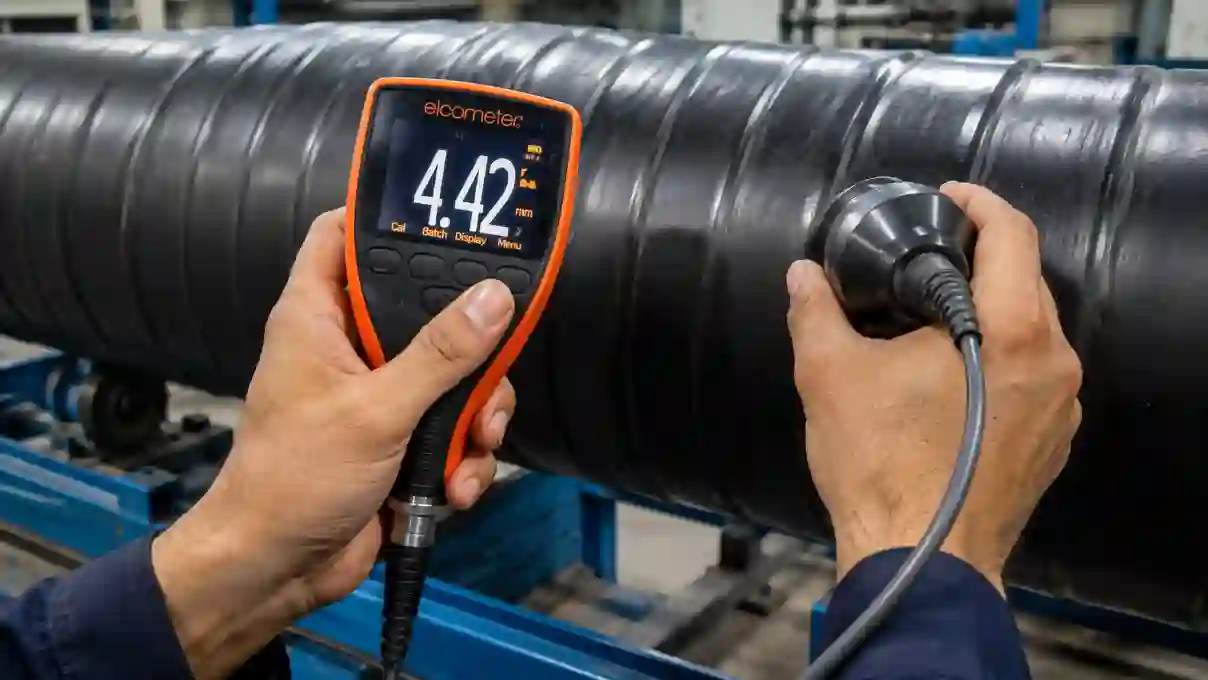
Every rubber lining job requires a systematic inspection program to verify that the applied lining meets specification before the equipment enters service.
Thickness Measurement
Rubber lining thickness is measured using an ultrasonic thickness gauge (for non-destructive measurement) or a calibrated needle-type gauge. Measurements are taken at a grid of locations across the lined surface to verify that the specified minimum thickness has been achieved everywhere. Typical lining thicknesses range from 3 mm to 12 mm or more depending on the application.
Holiday (Spark) Testing
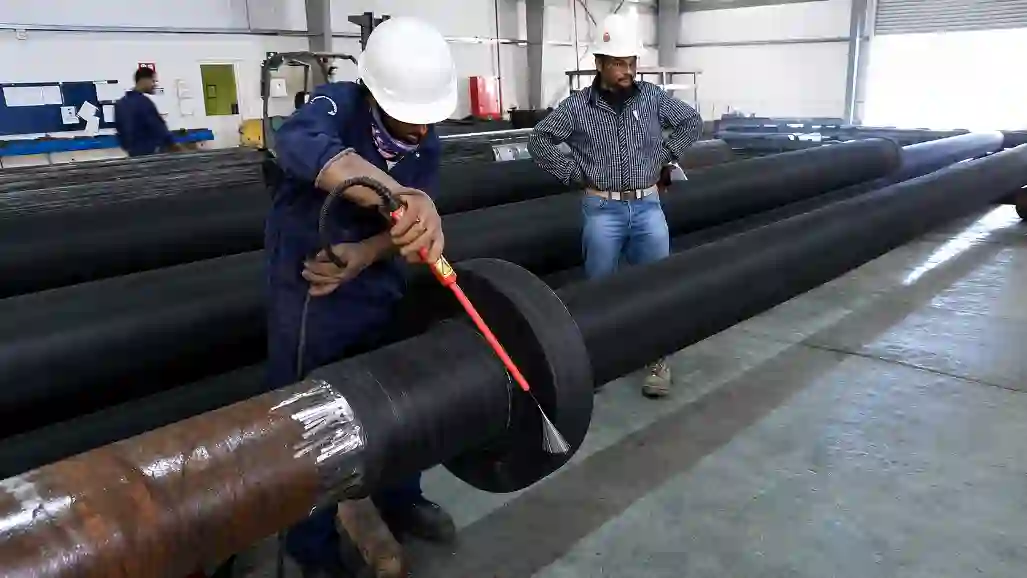
A holiday detector — also called a spark tester or jeeper — applies a high-voltage electrical signal to the lining surface using a conductive brush or electrode. Any pinhole, thin spot, or void in the rubber creates an electrical path to the metal, triggering an alarm. Holiday testing is the standard method for locating defects that are not visible to the eye.
For soft rubber linings, holiday testing voltage is typically calculated based on lining thickness — commonly around 5,000 volts per mm of lining thickness, but always verified against the project specification.
Hardness Testing
As described earlier, Shore hardness is measured at multiple locations to verify that the rubber has been correctly vulcanised and meets the specified hardness range.
Adhesion Testing
In some specifications, adhesion of the rubber to the metal is verified using a peel test on a sample coupon or a section of the lined surface. Minimum peel strength values are specified, and any area showing cohesive failure within the rubber (rather than adhesive failure at the bond line) is considered acceptable.
Visual Inspection
A thorough visual inspection checks the entire lined surface for bubbles, blisters, wrinkles, cuts, thin areas, poorly sealed joints, and any other visible defect. Any defect found is repaired before the equipment is accepted.
Common Defects in Rubber Lining and Their Causes
Understanding what can go wrong helps inspectors and applicators prevent problems before they become failures.
| Defect | Likely Cause |
| Air blisters | Insufficient rolling during application, air trapped under sheet |
| Delamination | Poor surface preparation, contaminated primer, incorrect primer tack |
| Pinholes | Thin rubber, contamination, mechanical damage during handling |
| Low hardness | Under-vulcanisation, incorrect cure time or temperature |
| Swelling in service | Wrong rubber selection for chemical environment |
| Edge lifting | Poor edge sealing, incorrect joint design |
Curing and Vulcanisation of Rubber Lining
After application, the rubber lining must be vulcanised — a chemical process in which sulphur cross-links form between the polymer chains, transforming the soft, sticky, uncured rubber into a tough, elastic, chemically resistant material.
There are two main vulcanisation methods used for rubber lining:
Autoclave (steam) curing is the highest-quality method. The lined equipment or component is placed inside a pressurised steam autoclave and cured at controlled temperature and pressure — typically 140–160°C and 3–5 bar — for several hours. Steam curing produces the most uniform and complete vulcanisation.
Open steam or hot water curing is used for very large vessels that cannot fit inside an autoclave. Live steam or hot water is introduced into the vessel or pipe, which is sealed to retain heat and pressure.
Cold-cure (self-curing) rubber uses chemical curing agents rather than heat. Cold-cure systems vulcanise at ambient temperature over several days. They are used when heat curing is not practical, but generally produce a lining with somewhat lower performance than heat-cured rubber.
Maintenance of Rubber Lined Tanks and Pipelines
One of the major advantages of rubber lining is that it requires very little maintenance when correctly applied and operated within its design conditions. However, periodic inspection and prompt repair of any damage are essential to maximise service life.
Recommended Maintenance Practices
- Conduct visual inspection of accessible lining surfaces at regular intervals — annually at minimum, or whenever the equipment is taken out of service for any reason.
- Use holiday testing to check for pinholes or disbondment in areas not visible to the naked eye.
- Repair any mechanical damage — cuts, tears, or gouges — promptly before corrosion can initiate beneath the lining.
- Avoid exposing the lining to temperatures, chemicals, or pressures outside its design limits.
- Protect rubber lined equipment from direct sunlight and ozone if stored outdoors for extended periods, as these degrade many rubber types over time.
- Keep records of lining installation dates, material specifications, and inspection results to track performance over the equipment’s life.
FAQs – Rubber Lining for Tanks and Piping
What is rubber lining?
Rubber lining is a protective layer of compounded rubber bonded to the inside or outside of metal equipment — such as tanks, vessels, and pipelines — to protect the metal from corrosion, chemical attack, and abrasive wear.
What is the purpose of rubber lining?
The purpose of rubber lining is to extend the service life of metal equipment by providing a durable barrier against corrosion, chemical attack, and physical wear. It also reduces maintenance costs and improves operational safety.
Which lining fabric is best?
For most industrial tank and pipe lining applications, the rubber compound itself is more important than the fabric backing. Polyester-backed sheets offer advantages over cotton in moisture resistance, while unreinforced sheets are preferred where conformability to complex shapes is needed.
Is rubber a type of PVC?
No. Rubber and PVC are entirely different materials. Rubber is an elastomeric polymer (natural or synthetic) that is flexible and elastic. PVC is a thermoplastic that is rigid unless plasticised. They have different chemical compositions, performance characteristics, and application methods.
What is the hardness of rubber lining?
Soft rubber linings typically fall in the range of 40–65 Shore A. Medium hard rubbers range from 65–80 Shore A. Hard rubber (ebonite) linings typically measure 70–85 Shore D. The correct hardness depends on the specific service conditions.
What rubber lining material is best for acids?
For strong acids, butyl rubber and hard rubber (ebonite) are commonly used. EPDM is preferred for hot dilute acids. Hypalon is selected for oxidising acids. Always verify against a chemical resistance chart for the specific acid concentration and temperature.
Is rubber used in tanks?
Yes. Rubber lining is widely used in storage tanks, reaction vessels, mixing tanks, and transport tanks across the chemical, mining, oil and gas, water treatment, and power generation industries.
How long does rubber lining last?
With correct material selection, proper surface preparation, quality application, and operation within design limits, rubber lining typically lasts 10–20 years or more. Some hard rubber linings in moderate chemical service have lasted over 30 years.
How is rubber lining thickness measured?
Rubber lining thickness is measured using an ultrasonic thickness gauge (non-destructive) or a calibrated pin gauge. Measurements are taken at multiple locations across the surface to verify uniform coverage.
What is holiday testing in rubber lining?
Holiday testing uses a high-voltage electrical detector to locate pinholes, thin spots, and voids in the rubber lining that are not visible to the eye. Any defect creates an electrical path to the metal and triggers an alarm.
Conclusion – Rubber Lining for Tanks and Piping
Rubber lining for tanks and piping is one of the most effective and proven methods for protecting metal equipment in chemically aggressive, abrasive, and corrosive industrial environments. From selecting the right rubber lining material and understanding the hardness requirements, to following correct surface preparation and vulcanisation procedures, every step in the rubber lining process contributes to the final performance and longevity of the system.
Whether you are protecting a sulphuric acid storage tank, a slurry pipeline in a mine, or an effluent treatment vessel, the right rubber lining — correctly applied and properly inspected — will extend your equipment’s service life, reduce your maintenance burden, and keep your operation running safely.
For any serious industrial application, rubber lining is not simply a coating choice. It is a long-term engineering investment.
Suggested Posts
Rubber Lining | Rubber Lining Material | Vulcanization
Low Voltage Wet Sponge Holiday Detector | Pinhole / Holiday Testers
Polyurethane Coatings | Polyurethane Coatings for Metal Surfaces
Knife Adhesion Test: Understanding ASTM D6677
About The Author
