
Introduction
Learn what alkylation is used for, how the alkylation unit works in a refinery, the sulphuric acid alkylation process, alkylation unit formulas, explosion risks, and why it matters in petroleum refining.
If you have ever filled up a car with high-octane petrol, you have benefited from alkylation — even if you have never heard the word before. Alkylation is one of the most important chemical processes in petroleum refining, and understanding it can help engineers, students, refinery operators, and safety professionals make better decisions every day.
This complete guide explains what alkylation is used for, how the alkylation unit works in a refinery, the key formulas involved, the sulphuric acid alkylation process, and the explosion and safety risks that come with it.

What Is Alkylation Used For?
Alkylation is a chemical process used in petroleum refining to produce high-octane, clean-burning fuel components that are blended into aviation gasoline (avgas) and premium motor fuel. In simple terms, it takes small, low-value hydrocarbon molecules and joins them together to create larger, more valuable molecules.
More specifically, alkylation combines light olefins — typically isobutylene, propylene, or butylene — with isobutane in the presence of a strong acid catalyst. The result is a product called alkylate, which has an exceptionally high octane rating (typically 92–98 RON) and very low vapour pressure.
Main Uses of Alkylation in the Petroleum Industry:
- Aviation gasoline (avgas) production — Alkylate is a primary blending component for 100LL avgas used in piston-engine aircraft. It provides the high octane rating these engines require without harmful additives.
- Premium motor gasoline blending — Alkylate is blended into regular and premium unleaded petrol to increase octane rating and improve combustion quality.
- Reformulated fuel production — Because alkylate is low in benzene, aromatics, and sulphur, it plays a critical role in producing cleaner, low-emission reformulated fuels that meet modern environmental standards.
- Refinery profitability — Converting cheap butane and propylene streams into premium-value alkylate is one of the most profitable conversion processes in any refinery.
Alkylation essentially solves a problem that refineries face every day: light gases produced during cracking operations would otherwise be flared or used as low-value fuel gas. Alkylation captures those light hydrocarbons and turns them into one of the highest-value products in the refinery.
Alkylation Unit in a Refinery: How Does It Work?
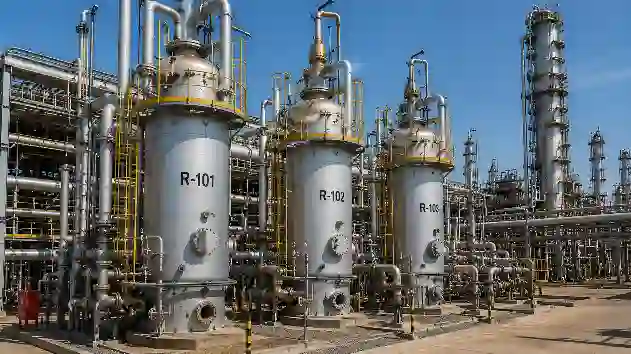
The alkylation unit is one of the most complex and safety-critical process units in any petroleum refinery. It sits downstream of the fluid catalytic cracking (FCC) unit, which produces the light olefin feedstocks that the alkylation unit needs.
Where the Feedstock Comes From
The FCC unit cracks heavy gas oil into lighter products. Among those lighter products are isobutylene, normal butylene, and propylene — the olefin feedstocks for the alkylation unit. The refinery also needs a supply of isobutane, which can come from the crude distillation unit, natural gas processing, or from isomerisation of normal butane.
The Basic Steps in a Refinery Alkylation Unit
- Feed preparation — Olefin and isobutane feeds are dried and treated to remove water, sulphur compounds, and other contaminants that would degrade the acid catalyst.
- Reaction section — The olefin and isobutane are contacted with a strong acid catalyst (either sulphuric acid or hydrofluoric acid) inside a reactor. The reaction is highly exothermic — it releases significant heat — and must be carefully controlled.
- Acid separation — After the reaction, the acid catalyst is separated from the hydrocarbon product in a settler vessel. The acid is recycled back to the reactor.
- Fractionation — The hydrocarbon phase is sent to a series of distillation columns to separate alkylate product from unreacted isobutane (which is recycled) and other light ends.
- Alkylate product — The final alkylate stream is cooled, quality-tested, and sent to the gasoline blending pool.
The two most widely used catalyst systems in refinery alkylation units are sulphuric acid (H₂SO₄) and hydrofluoric acid (HF). Each has different operating conditions, advantages, and safety considerations.
Alkylation Unit Formula: The Chemistry Explained
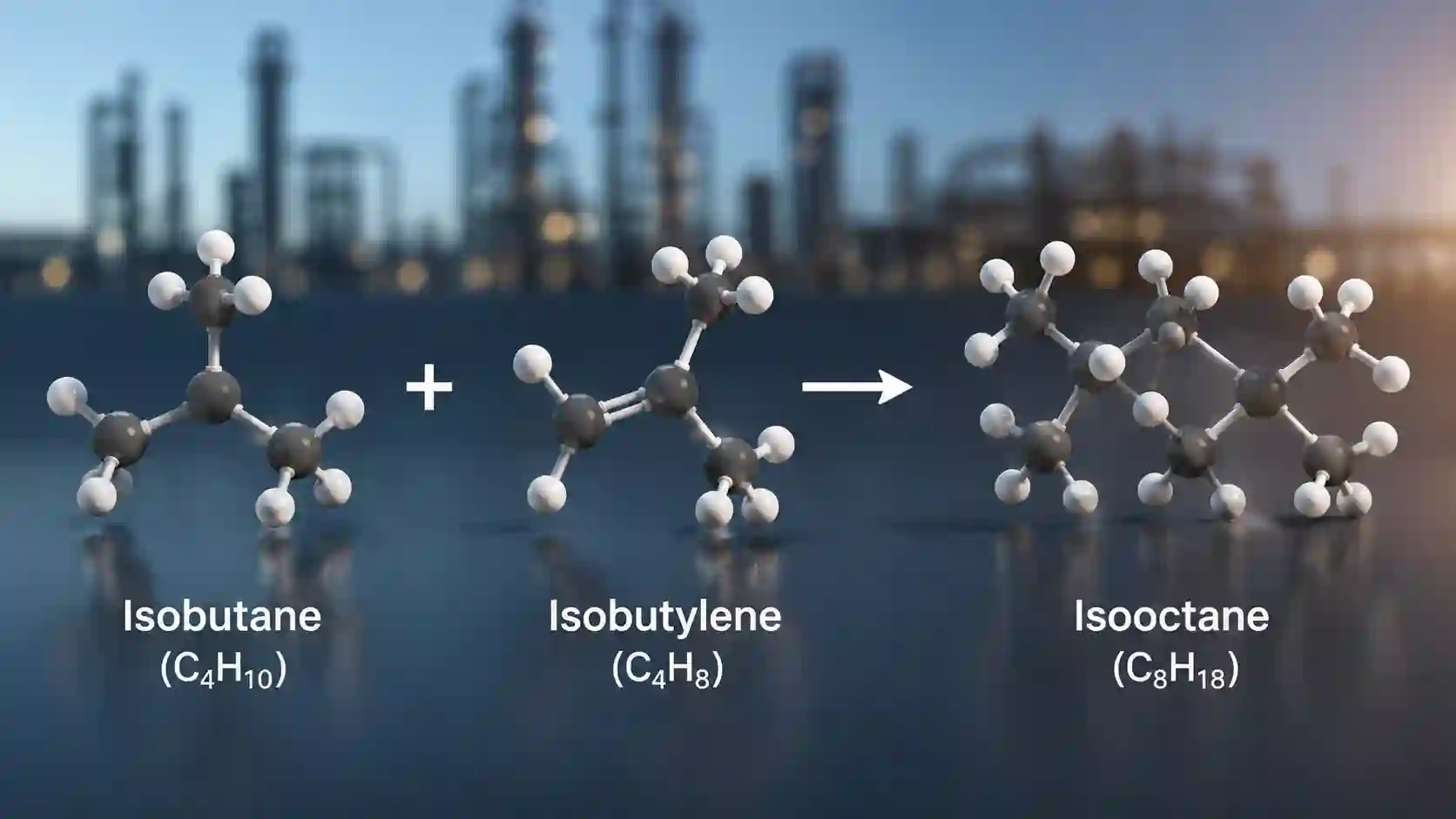
Understanding the alkylation unit formula helps engineers, chemists, and process technicians predict product quality and optimise unit performance.
The Core Alkylation Reaction
The most common alkylation reaction in petroleum refining involves isobutane (iC₄H₁₀) reacting with isobutylene (iC₄H₈):
Isobutane + Isobutylene → 2,2,4-Trimethylpentane (Isooctane)
iC₄H₁₀ + iC₄H₈ → C₈H₁₈
The product — 2,2,4-trimethylpentane, commonly known as isooctane — is the reference standard for an octane rating of 100. This is where the octane scale itself comes from.
Other olefins produce slightly different alkylate components:
- Isobutane + Propylene → C₇ alkylate (trimethylbutanes and dimethylpentanes)
- Isobutane + n-Butylene → C₈ alkylate (dimethylhexanes and other C₈ isomers)
- Isobutane + Amylene (C₅ olefin) → C₉ alkylate
The Isobutane-to-Olefin Ratio
One of the most important operating variables in any alkylation unit is the isobutane-to-olefin (I/O) ratio in the reactor. A high I/O ratio drives the reaction toward better alkylate quality (higher octane) and suppresses undesirable side reactions like olefin polymerisation.
Typical operating I/O ratios range from 5:1 to 15:1 by volume in commercial units, with higher ratios generally favoured for quality reasons.
Octane Number Formula Relevance
Alkylate quality is measured by its Research Octane Number (RON) and Motor Octane Number (MON). The posted octane at fuel stations is the average of the two: (RON + MON) / 2.
Alkylate from a well-operated sulphuric acid unit typically achieves: – RON: 93–98 – MON: 90–95 – Reid Vapour Pressure (RVP): 40–50 kPa (very low — desirable for summer fuel blending)
Alkylation Process in Petroleum Refining: A Deeper Look
The alkylation process in petroleum refining has been in commercial use since the 1930s, when it was first developed to produce high-octane aviation fuel for World War II aircraft engines. Today, virtually every complex refinery in the world operates an alkylation unit as part of its gasoline production configuration.
Why Alkylation Is So Valuable in Petroleum Refining
Modern environmental regulations have dramatically changed the gasoline blending toolkit available to refiners. Tetraethyl lead — once the most common octane booster — was phased out. MTBE (methyl tert-butyl ether), another popular octane enhancer, was banned in many countries due to groundwater contamination concerns. Benzene limits have been tightened sharply.
Alkylate fills this gap perfectly. It is:
- High octane — without the need for lead or oxygenate additives
- Low in aromatics — particularly benzene, toluene, and xylene (BTX)
- Sulphur-free — meeting the most stringent clean fuel specifications
- Low vapour pressure — helping refiners meet summer fuel volatility limits
- Excellent combustion quality — contributing to lower engine deposits and emissions
These properties make alkylate one of the most desirable blending components in any refinery’s gasoline pool, and the alkylation unit one of the highest-margin process units on site.
Feedstock Quality and Its Effect on Alkylate
The quality of the alkylate product depends heavily on the quality and composition of the olefin feedstock. Butylene-based feeds (particularly isobutylene and 2-butylene) produce higher-quality alkylate with better octane numbers than propylene-based feeds. Feeds containing dienes, sulphur compounds, or oxygenates can cause rapid acid consumption and degrade product quality.
Careful feed pretreatment — including drying, caustic washing, and diene removal — is essential to protect the acid catalyst and maintain alkylate quality.
Sulphuric Acid Alkylation Process: How It Works
The sulphuric acid (H₂SO₄) alkylation process is the most widely used alkylation technology in the world today, operated in hundreds of refineries across every continent.
Key Operating Conditions
| Parameter | Typical Range |
| Acid concentration | 88–96 wt% H₂SO₄ |
| Reactor temperature | 5–15°C (40–60°F) |
| Reactor pressure | 4–6 bar (60–90 psi) |
| Isobutane/olefin ratio | 6:1 to 12:1 |
| Acid consumption | 70–100 kg per tonne of alkylate |
The sulphuric acid alkylation process must operate at low temperatures — typically near 10°C — to minimise undesirable side reactions and acid-catalysed polymerisation. This is why sulphuric acid alkylation units require refrigeration systems, usually using propane as a refrigerant.
How the Sulphuric Acid Alkylation Reactor Works
The most common reactor design for sulphuric acid alkylation is the horizontal cascade reactor (used in the Stratford Engineering / Lummus technology) and the time-tank reactor (used in STRATCO Effluent Refrigerated technology from DuPont/Chemours).
In both designs, the acid and hydrocarbon are mixed intensively in a reaction zone to create an emulsion. The large acid-to-hydrocarbon interface promotes good contact and high conversion. After the reaction zone, the emulsion flows into a settler where gravity separates the denser acid phase from the lighter hydrocarbon product phase.
Why Acid Concentration Matters
The concentration of the sulphuric acid is one of the most critical process variables. As the alkylation reaction proceeds, the acid picks up water and becomes diluted. When acid concentration drops below about 88 wt% H₂SO₄, the catalyst becomes less effective and produces lower-octane, lower-quality alkylate. At this point, the spent acid must be withdrawn and sent to an acid regeneration plant (typically an acid plant that reconcentrates the acid by burning the organic content and absorbing SO₃).
Acid management — controlling the rate of fresh acid addition and spent acid withdrawal — is one of the key day-to-day operating tasks in any sulphuric acid alkylation unit.
Sulphuric Acid Alkylation vs. Hydrofluoric Acid Alkylation
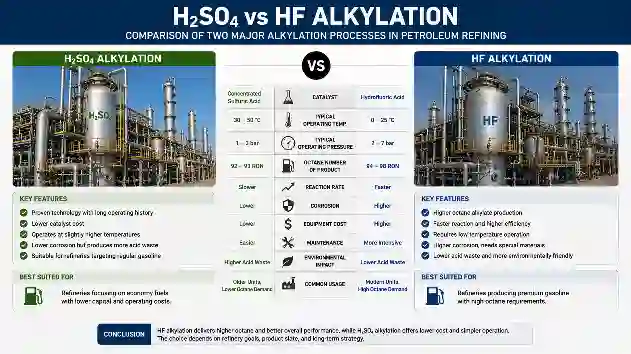
| Feature | H₂SO₄ Alkylation | HF Alkylation |
| Catalyst | Sulphuric acid | Hydrofluoric acid |
| Temperature | Low (5–15°C) — needs refrigeration | Moderate (24–38°C) — no refrigeration |
| Alkylate quality | Slightly higher octane | Slightly lower octane |
| Acid losses | Low | Very low |
| Safety hazard | Corrosive, acid burns | Extremely toxic vapour cloud risk |
| Acid regeneration | Off-site acid plant | On-site regeneration column |
| Capital cost | Higher (refrigeration) | Lower |
Both processes are used commercially, but HF alkylation has faced increasing regulatory scrutiny due to the risk of toxic HF vapour releases in populated areas. Many refineries in urban locations have either converted to sulphuric acid alkylation or are evaluating solid acid catalyst technologies as alternatives.
Alkylation Unit Explosion Risk: What You Need to Know
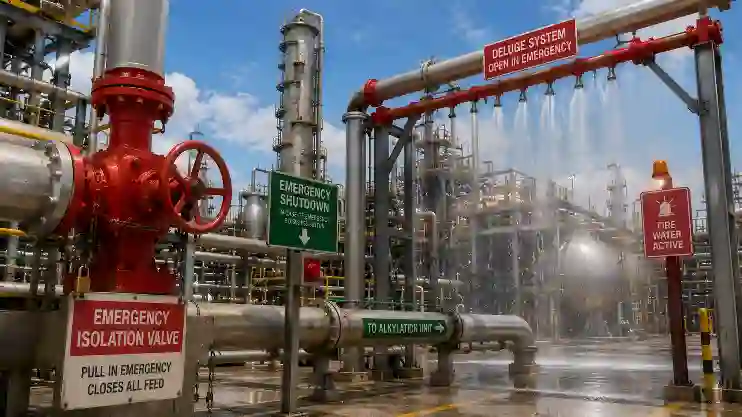
The alkylation unit is one of the highest-risk process units in any petroleum refinery from a safety standpoint. Understanding the explosion hazards is essential for operators, safety engineers, process safety management (PSM) teams, and plant designers.
Why Is the Alkylation Unit Dangerous?
The alkylation unit handles large inventories of:
- Isobutane — a highly flammable liquefied gas (LPG) with a wide flammability range (1.8–8.4% in air) and low ignition energy
- Light olefins (butylene, propylene) — also highly flammable LPG streams
- Concentrated sulphuric acid — highly corrosive, causes severe burns and can generate heat on contact with water
- Hydrofluoric acid (in HF units) — acutely toxic, capable of forming a dense, ground-hugging vapour cloud that can cause mass casualties if released
The combination of flammable light hydrocarbons under pressure and highly corrosive or toxic acid catalysts makes the alkylation unit one of the most hazardous units in any refinery.
Major Alkylation Unit Explosion and Accident History
Several major industrial accidents have involved alkylation units:
- Texas City Refinery, USA (2005) — One of the deadliest refinery disasters in US history. While centred on an isomerisation unit, the event highlighted the catastrophic consequences of hydrocarbon releases and vapour cloud explosions in refinery environments. It prompted an industry-wide review of safety practices at alkylation and other light-ends units.
- Sunray DX Oil Company, Texas (1956) — An early major alkylation unit fire that led to significant improvements in acid containment and emergency shutdown design.
These accidents underscore the importance of robust process safety management in alkylation unit design and operation.
Key Explosion Hazards in Alkylation Units
- Vapour Cloud Explosions (VCE) If a large quantity of isobutane or light olefin is released — through a pipe failure, flange leak, or pressure relief event — it can flash to vapour and form a large flammable cloud. If this cloud ignites (by a hot surface, spark, or open flame), the resulting unconfined vapour cloud explosion can be devastating.
- Boiling Liquid Expanding Vapour Explosions (BLEVE) If a vessel or storage sphere containing pressurised isobutane is exposed to fire, the external heat can cause the vessel to fail catastrophically before the pressure relief valves can respond. The resulting BLEVE propels fragments at high velocity over large distances and releases a massive fireball.
- Acid Releases Sulphuric acid releases cause immediate corrosion damage to equipment and severe burns to personnel. In HF alkylation units, even a small acid release can generate a toxic vapour cloud that requires full site evacuation and emergency response.
Safeguards and Risk Reduction Measures
Modern alkylation units incorporate multiple layers of protection against these hazards:
- Emergency isolation valves (EIVs) — Motor-operated block valves that can isolate sections of the unit quickly in an emergency, minimising the inventory of hydrocarbon released
- Deluge and fire suppression systems — Water deluge systems protect vessels and structures from fire exposure and can suppress vapour clouds from acid releases
- High-integrity pressure protection systems (HIPPS) — Electronic overpressure protection systems that act faster than conventional relief valves
- Process safety management (PSM) programs — Structured management systems covering hazard analysis, mechanical integrity, management of change, and emergency response planning
- Acid mitigation systems — In HF units, water deluge mitigation systems and HF-specific emergency response plans are mandatory
- Inventory minimisation — Modern unit designs aim to reduce the inventory of hazardous materials held in the process at any time
- Regular inspection and corrosion monitoring — Sulphuric acid causes severe corrosion of carbon steel, particularly at elevated temperatures. Inspection programmes using corrosion monitoring, thickness gauging, and non-destructive testing are critical to maintaining unit integrity.
Regulatory Framework for Alkylation Unit Safety
In the United States, alkylation units are covered by: – OSHA PSM Standard (29 CFR 1910.119) — Process Safety Management of Highly Hazardous Chemicals – EPA RMP (Risk Management Program) — Requiring offsite consequence analysis and emergency response planning – API RP 751 — Recommended Practice for Safe Operation of Hydrofluoric Acid Alkylation Units
In Europe, alkylation units fall under the Seveso III Directive (major accident hazard regulations), requiring formal major hazard reports and emergency planning.
Environmental Considerations in the Alkylation Process
Environmental performance is an increasing concern for alkylation unit operators worldwide.
Spent Acid Management
In sulphuric acid alkylation, spent acid containing diluted H₂SO₄ and organic contaminants must be processed in an acid regeneration plant. The spent acid is burned in a furnace, producing SO₂ gas, which is converted to SO₃ and absorbed in water to regenerate concentrated H₂SO₄. This process generates air emissions that are subject to strict environmental regulation.
Fugitive Emissions
Isobutane and light hydrocarbon emissions from pumps, compressors, flanges, and valves in the alkylation unit contribute to volatile organic compound (VOC) emissions. Modern leak detection and repair (LDAR) programmes are required at most refineries to minimise these fugitive emissions.
New Technologies: Solid Acid Alkylation
Several technology developers — including Honeywell UOP (AlkyClean process) and Albemarle (ionic liquid technology) — have developed or are commercialising solid acid alkylation processes. These use solid catalysts instead of liquid acids, eliminating the handling of corrosive and toxic liquid acid catalysts and significantly reducing the safety and environmental footprint of alkylation. Several commercial units using these technologies are now in operation or under construction worldwide.
Frequently Asked Questions:
Alkylation is used in petroleum refining to produce high-octane alkylate, which is blended into premium motor gasoline and aviation fuel. It converts light hydrocarbon gases (isobutane and olefins) into valuable, clean-burning fuel components.
What is an alkylation unit in a refinery?
An alkylation unit is a process plant within a petroleum refinery where isobutane and light olefins react in the presence of a strong acid catalyst (sulphuric acid or hydrofluoric acid) to produce alkylate — a high-octane gasoline blending component.
What is the alkylation unit formula?
The core reaction is: Isobutane (iC₄H₁₀) + Isobutylene (iC₄H₈) → Isooctane (C₈H₁₈). More generally: isobutane + olefin → high-octane branched alkane (alkylate).
What is the sulphuric acid alkylation process?
The sulphuric acid alkylation process uses concentrated sulphuric acid (88–96 wt%) as a catalyst to combine isobutane with light olefins at low temperature (5–15°C) to produce high-octane alkylate. It is the most widely used commercial alkylation technology.
Why is the alkylation unit in a refinery an explosion risk?
Alkylation units handle large quantities of flammable, pressurised light hydrocarbons (isobutane, butylene) alongside corrosive or toxic acid catalysts. A release of these hydrocarbons can form a flammable vapour cloud that, if ignited, causes a vapour cloud explosion. HF alkylation units also carry the risk of toxic vapour cloud formation.
What is the difference between HF and H₂SO₄ alkylation?
Both use strong acid catalysts to produce alkylate from isobutane and olefins. H₂SO₄ alkylation requires refrigeration but produces slightly higher-octane alkylate. HF alkylation operates at moderate temperature without refrigeration but poses a severe toxic vapour cloud hazard if HF is released.
Where is alkylate used?
Alkylate is blended into premium motor gasoline and aviation gasoline (avgas). It improves octane rating, lowers vapour pressure, and reduces harmful aromatic and sulphur content in the fuel pool.
Is alkylation environmentally friendly?
Compared to other octane-boosting options like tetraethyl lead or MTBE, alkylate is relatively clean — it is sulphur-free, low in benzene, and low in aromatics. However, the alkylation process itself generates spent acid waste and VOC emissions that require careful environmental management.
Conclusion
Alkylation is one of the most technically sophisticated and commercially valuable processes in any petroleum refinery. It takes cheap, low-value hydrocarbon gases and transforms them into premium-octane alkylate — one of the best blending components available for clean, high-performance fuel.
Here is what you should take away from this guide:
- What alkylation is used for: Producing high-octane, clean alkylate for gasoline and avgas blending.
- How the alkylation unit works in a refinery: Isobutane reacts with olefins over a strong acid catalyst, with downstream separation to recover alkylate and recycle isobutane.
- The alkylation unit formula: iC₄H₁₀ + iC₄H₈ → C₈H₁₈ (isooctane) is the key reaction.
- The alkylation process in petroleum refining: A critical downstream conversion unit that maximises refinery margin and enables clean fuel production.
- The sulphuric acid alkylation process: The world’s most widely used commercial alkylation technology, operating at low temperatures with concentrated H₂SO₄ catalyst.
- Alkylation unit explosion risks: Flammable hydrocarbon inventories and corrosive/toxic acid catalysts make this one of the most safety-critical units in any refinery, requiring rigorous process safety management.
Whether you are a refinery engineer, a process safety professional, a student of chemical engineering, or simply someone who wants to understand what happens inside a petroleum refinery, alkylation is a process well worth understanding in depth.
Suggested Posts
Catalytic Reforming Process in Refinery Explained
What Is a Hydrotreating Unit? Process, Working and Purpose Explained
DHT Unit in Refinery: What It Is, How It Works, and Why It Matters
What is a VDU Unit? Meaning, Process and Working Explained
About The Author
