
Introduction
Epoxy Coating Failure: Epoxy coatings are widely used in industrial environments for corrosion protection, durability, and chemical resistance. However, even high-performance coatings can fail—sometimes within days of application.
Epoxy coating failure is rarely random. In most cases, it results from preventable issues such as poor surface preparation, moisture contamination, or incorrect application practices.
This guide explains:
- Common epoxy coating defects
- Root causes of coating failure
- Epoxy paint blistering causes
- Inspection methods and prevention strategies
What is Epoxy Coating?
Epoxy coating is a protective system created by mixing resin and hardener, forming a rigid and chemically resistant film.
Common applications:
- Steel structures
- Pipelines
- Storage tanks
- Concrete floors
When applied correctly, epoxy coatings provide excellent adhesion, corrosion resistance, and long-term durability.
What is Epoxy Coating Failure?

Epoxy coating failure occurs when the coating loses adhesion, integrity, or protective performance due to poor surface preparation, environmental conditions, or incorrect application.
Common signs include:
- Blistering
- Peeling
- Cracking
- Delamination
- Pinholes
Common Epoxy Coating Defects
Understanding defects is key to diagnosing coating problems effectively.
- Blistering
Blistering appears as bubbles on the coating surface and is one of the most frequent issues.
👉 Often linked to epoxy paint blistering causes such as moisture or solvent entrapment.
- Peeling (Adhesion Failure)
Occurs when the coating separates from the substrate due to poor bonding.
- Cracking
Develops when the coating becomes brittle due to improper curing or excessive thickness.
- Delamination
Separation between coating layers, usually caused by contamination or improper recoat timing.
- Pinholes and Voids
Small defects that expose the substrate and can lead to corrosion.
Main Causes of Epoxy Coating Failure
- Poor Surface Preparation (Leading Cause)
Most coating failures originate here.
Common issues:
- Rust, oil, or dust contamination
- Inadequate abrasive blasting
- Incorrect surface profile
👉 Even the best coating system will fail without proper surface preparation.
- Moisture Contamination
A major contributor to epoxy paint blistering causes.
Effects:
- Trapped moisture creates internal pressure
- Leads to osmotic blistering
- Common in humid or coastal environments
- Incorrect Mixing Ratio
Epoxy requires precise mixing of resin and hardener.
Problems caused:
- Soft or uncured coating
- Weak adhesion
- Premature failure
- Improper Environmental Conditions
Critical factors often ignored on-site:
- High humidity
- Extreme temperatures
- Dew point proximity
👉 Applying coating near dew point can cause immediate failure.
- Excessive Coating Thickness
Over-application leads to:
- Solvent entrapment
- Internal stress
- Cracking or blistering
- Inadequate Curing
If curing is incomplete:
- Coating remains soft
- Easily damaged
- Reduced service life
- Contamination Between Coats
Dust or moisture between layers results in:
- Delamination
- Weak intercoat bonding
Epoxy Paint Blistering Causes
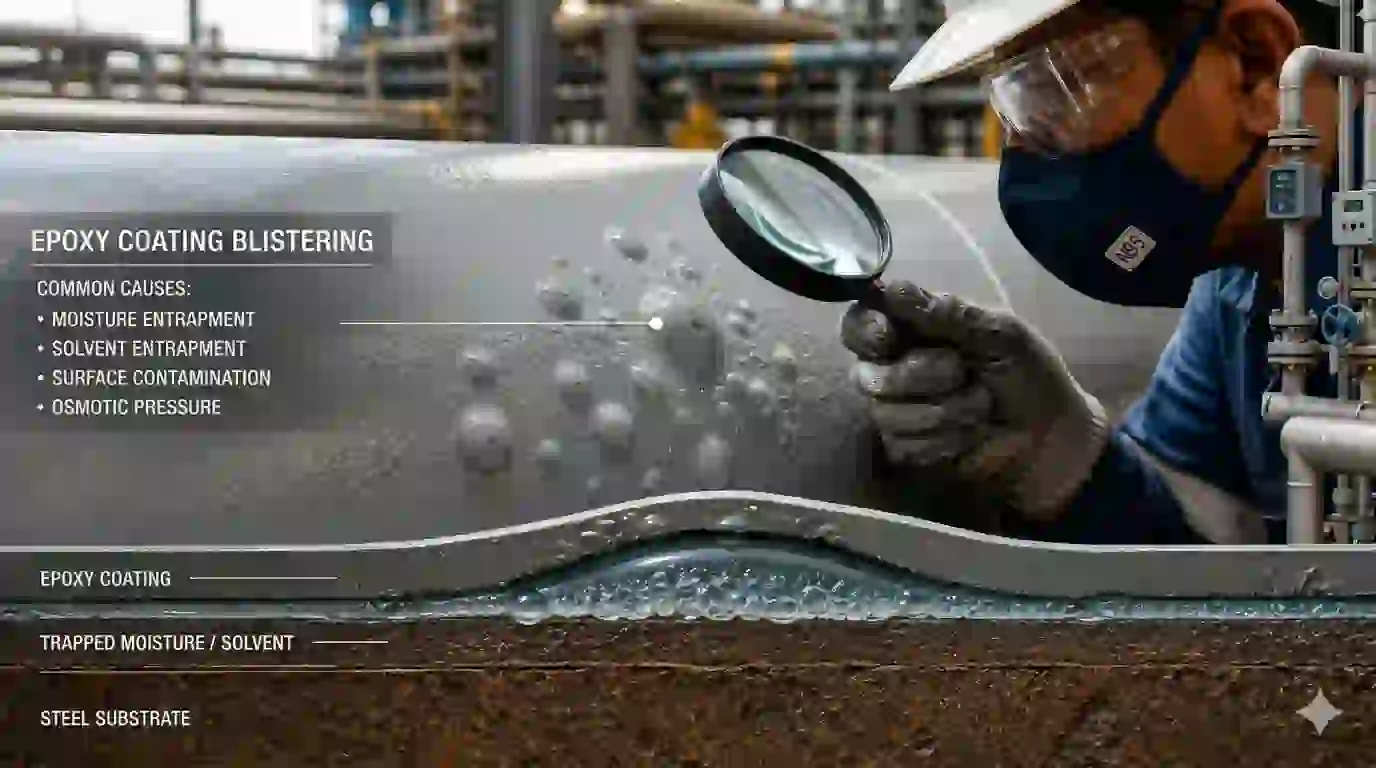
Epoxy paint blistering is caused by moisture entrapment, osmotic pressure, solvent entrapment, and surface contamination.
Detailed causes:
Moisture Entrapment
Water trapped beneath the coating expands and forms blisters.
Osmotic Blistering
Water penetrates the coating and accumulates at the interface.
Solvent Entrapment
Occurs when coating dries too quickly on the surface.
Surface Contamination
Salts and impurities attract moisture, accelerating blister formation.
👉 For a broader explanation, see your article on paint blistering causes (internal link).
Epoxy Blistering vs Peeling vs Delamination (Quick Comparison)
| Defect | Main Cause | Appearance |
| Blistering | Moisture / pressure | Bubbles on surface |
| Peeling | Poor adhesion | Coating lifts off |
| Delamination | Intercoat contamination | Layers separate |
👉 This section is optimized for featured snippets + quick answers
Real Site Example
On a pipeline project in a coastal environment, blistering appeared within two weeks of coating application. Investigation showed that the coating was applied when the surface temperature was close to the dew point.
Moisture condensed on the steel surface, leading to osmotic blistering shortly after curing.
👉 This highlights how small environmental mistakes can lead to early coating failure.
Inspection and Testing Methods
Proper inspection ensures coating quality and early defect detection.
- Visual Inspection
Identifies visible defects such as blistering and peeling.
- Dry Film Thickness (DFT) Measurement
Ensures coating thickness meets specification.
- Adhesion Testing
Evaluates bonding strength between coating and substrate.
- Holiday Testing
Detects pinholes and discontinuities.
- Environmental Monitoring
Tracks:
- Temperature
- Humidity
- Dew point
How to Prevent Epoxy Coating Failure
- Ensure Proper Surface Preparation
- Abrasive blasting to required standard
- Remove contaminants
- Maintain correct profile
- Control Environmental Conditions
- Avoid high humidity
- Maintain safe dew point margin
- Apply within recommended temperature
- Follow Manufacturer Guidelines
- Correct mixing ratio
- Proper induction time
- Recommended application method
- Apply Correct Thickness
- Avoid over-application
- Follow specified DFT
- Allow Proper Curing
- Ensure full curing before exposure
- Avoid early service conditions
- Maintain Cleanliness Between Coats
- Remove dust
- Follow recoat interval
How to Repair Epoxy Coating Failure
Full Repair
- Remove defective coating
- Re-prepare surface
- Reapply coating
Localized Repair
- Sand affected area
- Clean thoroughly
- Apply touch-up coating
FAQs
What causes epoxy coating failure?
Epoxy coating failure is mainly caused by poor surface preparation, moisture contamination, incorrect mixing, and improper application conditions.
Why does epoxy coating blister?
Blistering occurs due to moisture entrapment, osmotic pressure, or solvent entrapment.
How to prevent epoxy coating defects?
Proper surface preparation, environmental control, and correct application practices prevent most defects.
How long does epoxy coating last?
Typically 5–10 years depending on environment and application quality.
Conclusion
Epoxy coating failure is not random—it is usually the result of controllable factors during preparation and application.
Most failures are linked to:
- Poor surface preparation
- Moisture contamination
- Incorrect application practices
By understanding epoxy coating defects and applying proper inspection and preventive measures, coating professionals can significantly improve performance and service life.
👉 In real-world projects, attention to small details often makes the biggest difference.
Suggested Posts
Coating Blistering: Causes, Prevention & Role of Chloride Contamination
Coating Inspection Standards (ASTM & ISO): Field Reference Guide for Inspectors
Best Industrial Coatings for Corrosion Protection: 11 Types Explained
Spray Painting: Methods, Equipment and Principles Explained
About The Author
