
Introduction
Coating blistering is a common problem seen on painted steel surfaces. It usually starts as small bubbles, but over time, it can lead to serious coating failure.
At first glance, blistering may look like a minor surface defect. However, it often indicates deeper issues such as poor surface preparation, moisture, or contamination.
In industries like marine, oil & gas, and infrastructure, coating failure can lead to corrosion, safety risks, and high repair costs.
In this article, you will learn in simple terms what coating blistering is, what causes it, and how chloride contamination plays a major role in this problem.
What is Coating Blistering? (Simple Definition)
Coating blistering is the formation of bubbles or raised areas on a painted surface due to trapped moisture, air, or contaminants under the coating.
These blisters may:
- Stay small
- Grow over time
- Burst and expose the steel
Once the coating breaks, the surface becomes vulnerable to corrosion.
Where is Coating Blistering Commonly Seen?
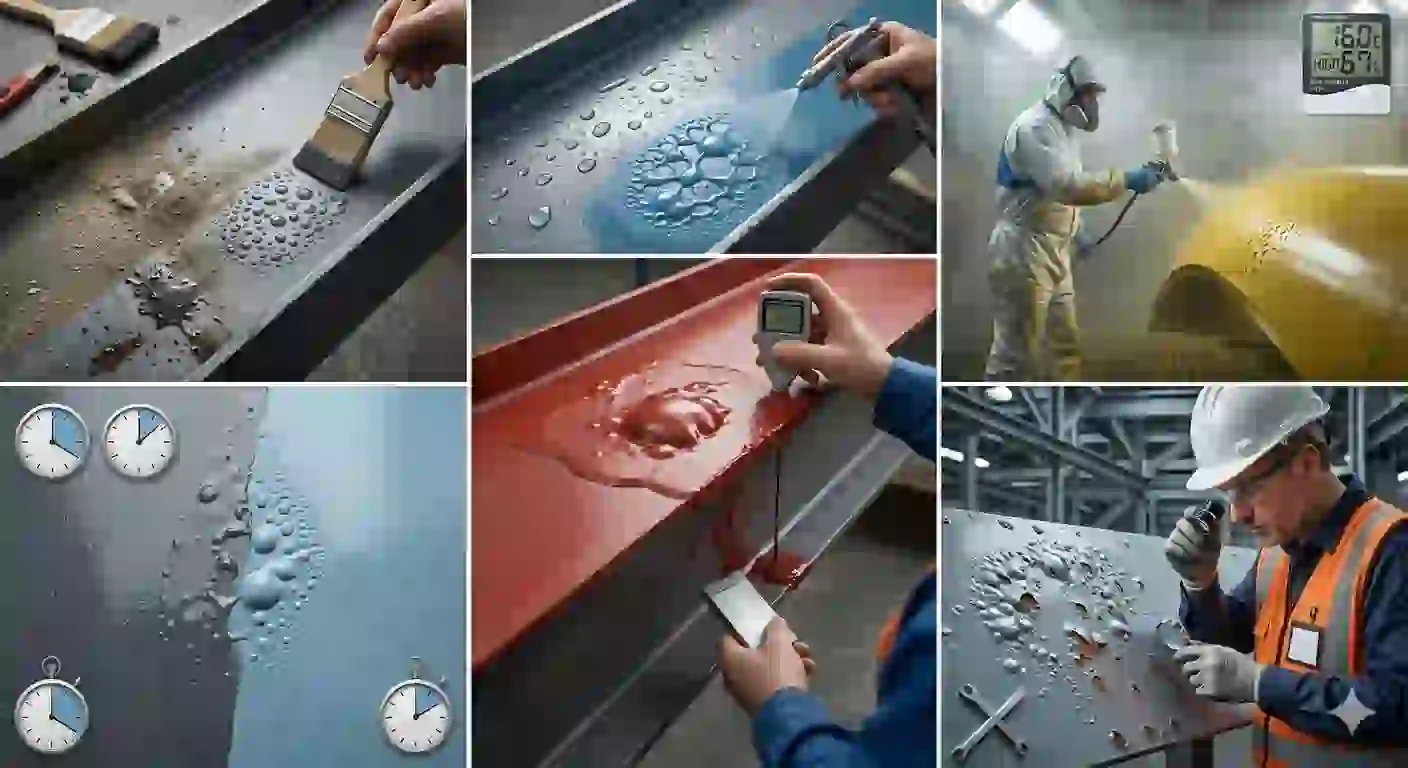
Coating blistering is more common in environments where moisture and salt are present, such as:
- Marine and offshore structures
- Coastal industrial plants
- Oil & gas facilities
- Bridges and pipelines
These environments increase the risk of chloride contamination and moisture exposure.
What is Osmotic Blistering in Coating?
Osmotic blistering is one of the most common types of blistering, especially in coastal and marine environments.
Understanding Osmosis in Simple Words
Osmosis is the movement of water through a coating layer due to a difference in concentration.
When salts like chlorides are present on the steel surface, they attract moisture from the surrounding air.
This creates pressure under the coating, which leads to blister formation.
How Chloride Contamination Causes Coating Failure
Chloride contamination is a major hidden cause of coating blistering.
Even if a surface looks clean, invisible salts can still remain on it.
Step-by-Step Process
- Chloride salts remain on the steel surface
- Coating is applied over the contaminated surface
- Salts attract moisture from the environment
- Water moves through the coating film
- Pressure builds under the coating
- Blisters form on the surface
This process is slow but continuous, which is why blistering may appear after some time.
Acceptable Chloride Limits Before Coating
Before applying coating, it is important to ensure that the chloride level on the surface is within acceptable limits.
Typical values used in industry are:
- Below 20 mg/m² for critical coatings
- Up to 50 mg/m² depending on project specification
If chloride levels are higher than this, the risk of blistering increases significantly.
How to Test for Chloride on Steel Surface
Testing is the only way to confirm whether a surface is truly clean.
Bresle Method (Simple Explanation)
The Bresle method is widely used in the field.
Steps:
- A test patch is placed on the steel surface
- A liquid is injected inside the patch
- The liquid dissolves any salts present
- The solution is tested to measure contamination
This method helps inspectors make informed decisions before coating.
Types of Coating Blistering
Not all blistering is the same. Identifying the type helps find the root cause.
- Osmotic Blistering
Caused by salt contamination and moisture movement.
- Solvent Blistering
Occurs when solvents are trapped inside thick coatings.
- Heat Blistering
Caused by high temperatures or direct sunlight exposure.
- Moisture Blistering
Occurs when water is trapped under the coating during application.
Main Causes of Coating Blistering

- Poor Surface Preparation
If the surface is not properly cleaned, contaminants like oil, dust, rust, and salts remain.
This reduces coating adhesion and leads to failure.
- Moisture on the Surface
Applying coating on a wet surface or near dew point conditions traps moisture inside.
- High Humidity During Application
High humidity increases the chances of condensation forming on the surface.
- Excessive Coating Thickness (High DFT)
Applying too much coating in one layer traps solvents inside, which later form blisters.
- Improper Curing Between Coats
If the previous coat is not fully dry, the next coat seals in moisture or solvents.
Pre-Coating Inspection Checklist
Before applying any coating, inspectors should check the following:
- Surface is clean and free from oil, grease, and dust
- No visible rust or old coating residue
- Chloride levels are within acceptable limits
- Surface temperature is above dew point
- Relative humidity is within allowed range
- Dry Film Thickness (DFT) is planned
- Previous coat is fully cured
This checklist helps prevent most coating failures.
How to Prevent Coating Blistering
Follow These Practical Steps
- Ensure proper surface cleaning
- Always test for chloride contamination
- Monitor environmental conditions
- Apply coating within specified thickness
- Allow proper drying time between coats
- Carry out inspection at every stage
Prevention is always better and cheaper than repair.
Best Practices for Long-Lasting Coating Performance
To ensure that coating performs well for a long time, follow these best practices:
- Always use trained applicators
- Follow manufacturer’s instructions strictly
- Store paint materials properly before use
- Mix coating components in correct ratio
- Avoid shortcuts during surface preparation
- Maintain proper inspection records
Small mistakes during application can lead to big failures later.
Real Case Example from Inspection
During a coating inspection in a coastal environment, blistering was observed on a steel structure.
The surface looked clean visually, but testing revealed high chloride contamination.
Corrective actions taken:
- Blistered coating was removed
- Surface was re-cleaned
- Chloride levels were reduced
- Coating was reapplied under controlled conditions
This shows that visual inspection alone is not enough.
Common Mistake Inspectors Should Avoid
One of the most common mistakes is relying only on visual cleanliness.
A surface may look perfect but still contain harmful salts.
Proper testing is essential to ensure long-term coating performance.
Why Coating Blistering Should Not Be Ignored
- Leads to coating delamination
- Exposes steel to corrosion
- Reduces coating life
- Increases maintenance cost
In marine and coastal environments, this problem becomes more serious due to high salt exposure.
Difference Between Blistering and Peeling
Many people confuse blistering with peeling, but they are different problems.
- Blistering: Bubbles form due to trapped moisture or salts
- Peeling: Coating comes off due to poor adhesion
Blistering is usually caused by internal pressure, while peeling is mostly due to surface preparation issues.
Understanding the difference helps in finding the correct root cause.
Conclusion
Coating blistering may appear small, but it is a sign of a deeper problem.
In most cases, the root cause is poor surface preparation or chloride contamination.
The key takeaway is simple:
A coating is only as good as the surface beneath it.
By following proper cleaning, testing, and inspection practices, you can prevent blistering and improve coating life.
“Based on field inspection experience, chloride contamination is often missed during surface preparation.”
FAQs
-
What causes coating blistering?
Blistering is caused by trapped moisture, air, or contaminants under the coating.
-
What is osmotic blistering?
It is blistering caused by water movement through coating due to salt contamination.
-
Why are chlorides harmful in coating?
Chlorides attract moisture and create pressure under the coating, leading to failure.
-
Can blistering be repaired?
Yes, damaged coating must be removed and the surface must be properly prepared again.
-
How do you check chloride contamination?
Using field test methods like the Bresle patch method.
-
Is blistering only a cosmetic issue?
No, it can lead to corrosion and serious structural damage.
-
What is the role of humidity in blistering?
High humidity can trap moisture under the coating during application.
-
How can coating blistering be prevented?
By proper surface preparation, testing, correct application, and inspection.
Suggested Posts
Coating Inspection Standards (ASTM & ISO): Field Reference Guide for Inspectors
Pipeline Coating Failure: Why FBE Coatings Fail in the Field
Best Industrial Coatings for Corrosion Protection: 11 Types Explained
Dolly Test (Pull-Off Adhesion Test): Procedure, Standards and Acceptance Criteria
About The Author

an excellent posted ,as a beginner my deepest and highest appreciated for you
thank you
Thank you Mr. Efendy for your valuable feedback, appreciated.