
Anti fouling paint is a special coating for the underwater parts of boats that stops sea growth like algae, barnacles, and slime from sticking to the hull. It keeps the bottom smooth, saves fuel, protects the structure, and reduces cleaning and repair costs.
Below is a complete, simple guide to anti fouling paint, including surface preparation, testing, spray equipment, weather limits, and film thickness.
What is anti fouling?
Anti fouling means stopping unwanted growth from sticking to a surface that stays in water for a long time. On boats and ships, this growth is usually algae, slime, barnacles, mussels, and other small sea animals that build a dirty layer on the hull.
This fouling layer makes the boat:
- Slower, because the surface is rough and drags in the water.
- Heavier, because of extra growth stuck to the hull.
- Use more fuel, because the engine must work harder to push the boat.
- More at risk of damage and corrosion, especially on steel or aluminum.
Anti fouling coatings, such as anti fouling paint, bottom paint, and anti fouling spray, are designed to keep this growth away and keep the hull cleaner for longer.
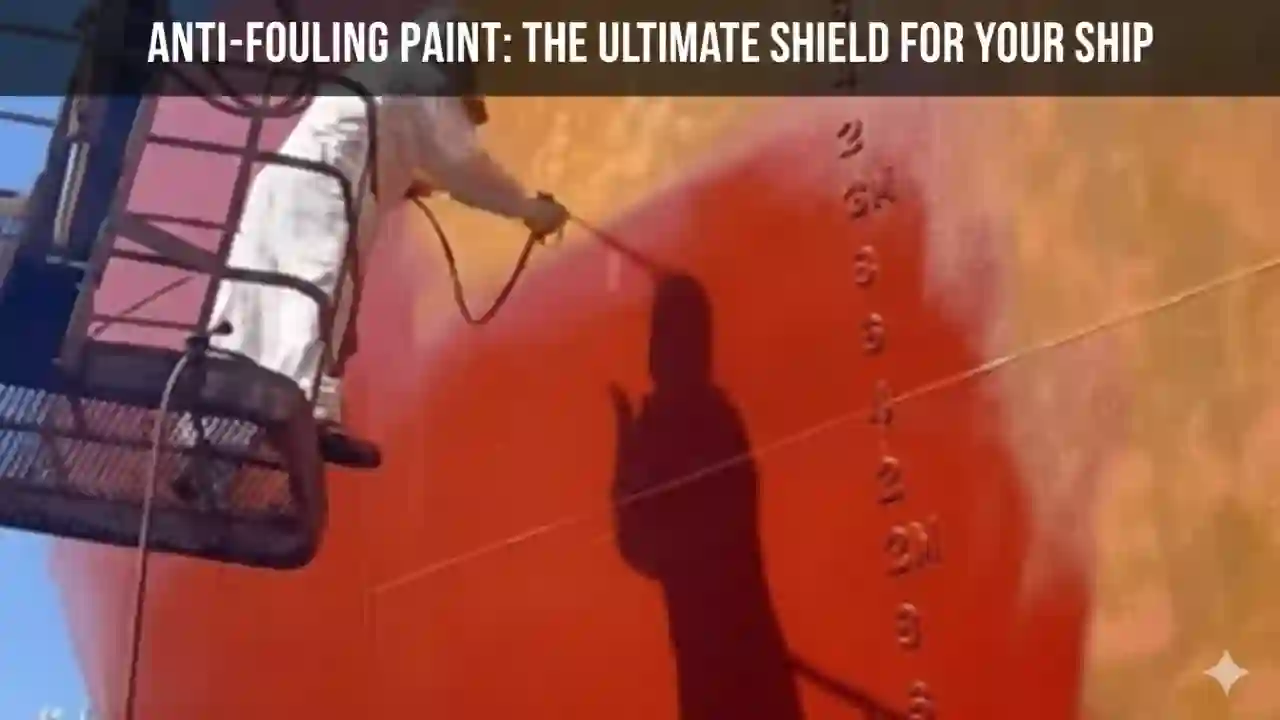
What is anti fouling paint?
Anti fouling paint (also called anti fouling bottom paint or bottom paint) is a coating that goes on the underwater parts of a boat or ship. It is commonly used on:
- Hull and keel
- Rudder and skeg
- Underwater appendages, drives, and some propellers
The paint contains active ingredients (often copper or other biocides) or special non-stick resins that make it hard for sea life to attach. Some release biocides slowly into the thin water layer at the surface, and some are very smooth “foul-release” coatings that cause growth to fall off when the boat moves.
In simple words, anti fouling paint is like a shield for the bottom of your boat. It keeps the hull smooth, cleaner, and safer.
Why anti fouling bottom paint matters
Using anti fouling bottom paint gives several important benefits:
- Better speed and smoother handling because the hull is clean.
- Lower fuel use because there is less drag in the water.
- Protection of the hull against moisture and corrosion.
- Less time and money spent scraping and cleaning.
- Longer life of the hull and underwater fittings.
For any boat that stays in the water for weeks or months, anti fouling paint is usually necessary, not optional.
How anti fouling coatings work
Anti fouling coatings work in three main ways.
- Biocidal antifouling
These paints release a controlled amount of active ingredients (biocides), such as copper compounds, into the thin layer of water at the hull surface. Microorganisms and larger fouling organisms do not like this environment, so they do not attach or they die quickly. - Foul-release (non-stick) coatings
These use very smooth and slippery materials, such as silicone or fluoropolymer, that make it hard for fouling to grip. When the boat moves, water flow helps push any weakly attached growth off the surface. - Self-polishing or ablative systems
Self-polishing paints slowly wear away in a controlled way, exposing fresh active layer as the boat moves through the water. This keeps the anti fouling effect steady over time and reduces thick paint build-up.
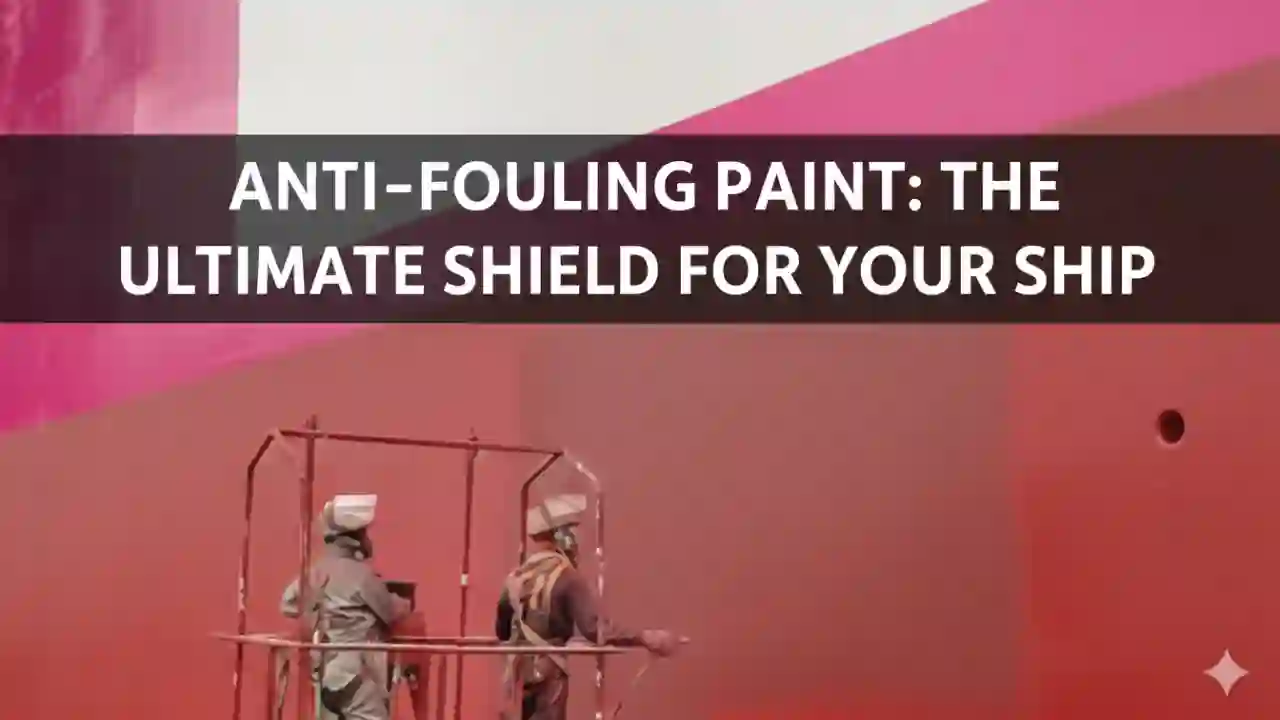
Types of anti fouling paint
When choosing the best anti fouling paint, it helps to know the main types.
- Soft / ablative anti fouling
- Wears away slowly like soap, exposing fresh active ingredients.
- Good for cruising boats and sailing yachts that move regularly.
- Often leaves less thick build-up over several seasons.
- Hard anti fouling
- Forms a tough, hard film that does not erode much.
Suitable for high-speed boats and boats that are scrubbed during the season.
- Can handle frequent hauling and launching.
- Foul-release / biocide-free anti fouling
- Uses smooth, non-stick surfaces instead of strong biocides.
- More eco-friendly and often used where regulations are strict.
Usually works best when the boat is used regularly so water flow helps clean it.
- Anti fouling spray
- Handy for small or complex parts like propellers, drives, trim tabs, and thrusters.
- Applied with aerosol cans; easy to reach tight spots.
- Often has shorter life than full rolled or sprayed hull coatings.
How to choose the best anti fouling paint
There is no single “best anti fouling paint” that fits every boat. You need to match the product to your conditions.
Key points to consider:
- Water type and temperature
- Warm, salty water causes faster fouling and often needs stronger antifouling.
- Cool or freshwater can sometimes use milder systems.
- Boat speed and use
- Slow or moderate-speed boats often do well with ablative paints.
- Very fast boats and racing craft often need hard paints.
Hull material
Some copper-based paints are not safe on aluminum because they can cause galvanic corrosion.
Always check the technical data sheet to see if the paint is approved for fiberglass, steel, aluminum, or wood.
- Existing coating
- New paint must be compatible with the old one.
- If unsure, many manufacturers suggest a primer or tie-coat between old and new systems.
Local rules and environment
- Some regions restrict certain biocides and high-copper paints.
- In such places, foul-release or low-toxicity paints may be recommended.
Surface preparation requirements
Good surface preparation is the most important step for long-lasting anti fouling coatings.
Typical surface preparation steps:
- Cleaning
- Lift the boat and high-pressure wash the hull to remove slime, salt, and loose growth.
- Remove heavy barnacles and shells with scrapers, taking care not to gouge the hull.
- Removing loose or failed paint
- Sand or scrape off flaking and poorly bonded old anti fouling paint.
- In badly degraded areas, take the hull back to sound coating or bare substrate.
Sanding and profiling
- Wet-sand with around 80-grit wet‑and‑dry paper to remove “spent” antifouling and to create a visible surface profile.
- Rinse thoroughly after sanding to remove dust and residue.
- Degreasing
- Clean with a suitable detergent or solvent cleaner to remove grease, oil, and pollutants, especially around the waterline and stern gear.
Special substrates
- Steel and aluminum: remove rust to bright metal with appropriate grinding or blasting and apply suitable primer systems before antifouling.
- Lead or cast iron keels: remove oxide and rust, clean thoroughly, then prime with etch primer and suitable epoxy or tie coat.
- A clean, dry, and slightly rough surface is essential to help the new anti fouling bottom paint stick properly and last longer.
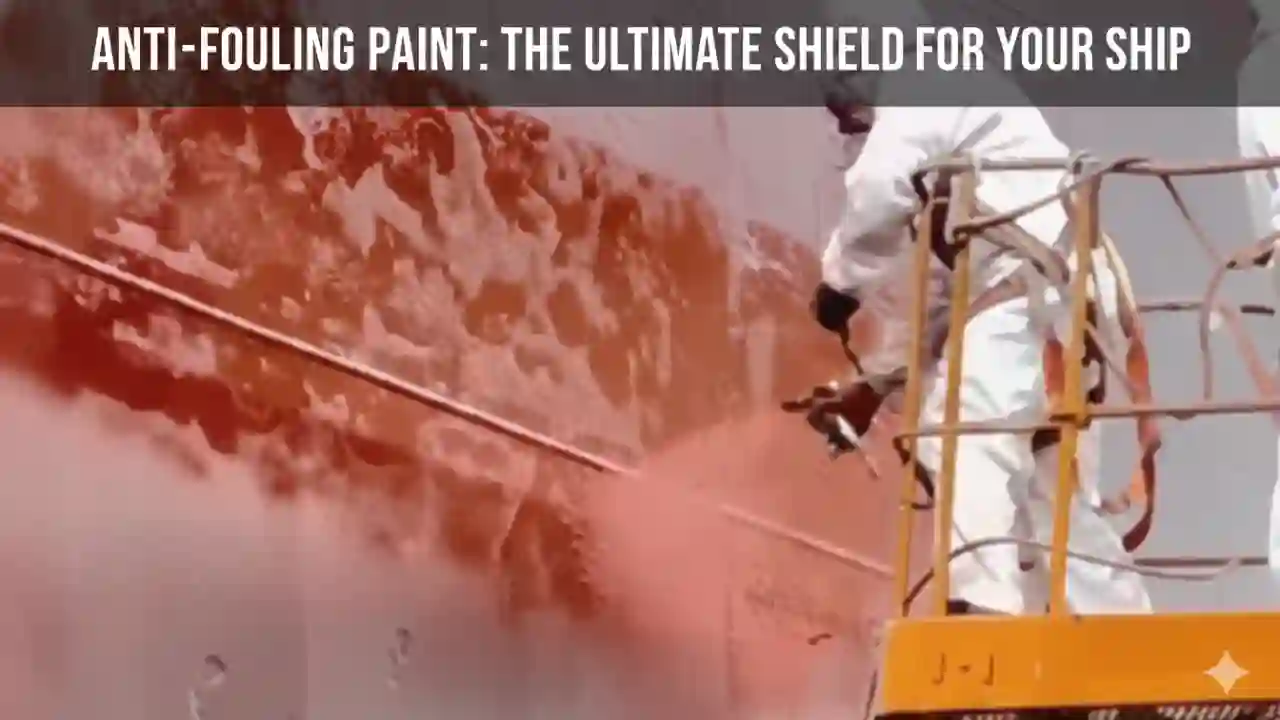
Basic tests during surface preparation
Several simple checks help make sure the surface is ready before painting:
Cleanliness test
After washing and sanding, rub the surface with a clean white cloth. If the cloth picks up a lot of dust or grease, more cleaning is needed.
Soundness/adhesion check of old paint
Lightly scrape or cross-hatch a small area of existing coating with a knife or sharp tool. If large flakes peel off easily, the old coating is not sound and may need full removal or priming.
Dryness check
Make sure the surface is visually dry and free from standing water before priming or painting.
For deeper repairs and epoxy barrier coats, professionals may also check moisture content of fiberglass hulls using moisture meters.
For critical ships or big projects, more advanced tests like adhesion tests, salt tests, or blast cleanliness standards may be specified by coating manufacturers or inspectors, but for typical small boats the simple checks above are commonly used.
Primers and tie coats
Many anti fouling coatings need a compatible primer or tie coat, especially on:
Bare fiberglass, steel, aluminum, or wood
Areas where old paint has been fully removed
When changing from one type of antifouling to another
Primers:
Seal the substrate against moisture and help prevent problems like osmosis in fiberglass and corrosion in metals.
Provide a good surface for the anti fouling paint to grip.
Always follow the manufacturer’s data sheet for recommended primer type and minimum and maximum overcoating intervals.
Application methods and spray pumps
Anti fouling paint can be applied by brush, roller, or spray, but for spraying there are extra safety and equipment needs.
Common methods:
Roller: Very common for yacht and small boat owners; medium-pile or solvent-resistant foam rollers are often suggested.
Brush: Used for edges, waterline, and hard-to-reach areas.
Spray: Typically done by professional applicators in controlled conditions because overspray and vapors can be harmful.
For spray application, manufacturers often recommend:
Airless spray pumps capable of handling high-solids, solvent-based marine coatings.
Typical tip sizes for airless spray in this type of product range around 0.017–0.021 inch (for example 517–521 tips), depending on product viscosity and required build.
Always check the specific product data sheet for:
Recommended spray type (airless / conventional)
Tip size and spray pressure range
Thinner type and maximum thinning percentage, if allowed
When using spray for anti fouling coatings:
Use proper PPE (respirator, gloves, goggles, coveralls).
Spray only in well-ventilated or dedicated spray areas to avoid inhaling toxic particles.
Weather and environmental conditions
Weather conditions have a big effect on the success of anti fouling paint application.
General good-practice conditions:
Temperature
Do not paint below the minimum temperature listed on the data sheet (often around 5–10°C, 41–50°F) or above the maximum recommended limit.
Very cold weather slows drying; very hot weather can cause solvent to flash off too fast and cause poor film formation.
Humidity and dew point
Avoid painting when surfaces are cold and close to dew point, as condensation can form and cause loss of adhesion.
The surface should be at least a few degrees above dew point and visibly dry.
Rain and direct water exposure
Do not paint in rain or if rain is likely before the coating has skinned and dried according to the data sheet.
Protect the freshly painted surface from water splashes or early immersion.
Sun and wind
Strong sun and hot, windy conditions can cause paint to dry too quickly, leading to brush marks or poor leveling; shading or painting at cooler times of day can help.
Following these weather guidelines reduces problems like blistering, poor adhesion, and uneven finish.
Dry film thickness (DFT) and wet film thickness (WFT)
Getting the right film thickness is critical for proper anti fouling performance.
Dry film thickness (DFT) is the thickness of the coating after it has dried and cured.
Wet film thickness (WFT) is the thickness right after application while the paint is still wet.
Manufacturers specify target DFT per coat and total DFT needed for full protection. Exact numbers depend on the product, but many marine antifouling paints target a DFT range per coat and a minimum total DFT over the system.
To control thickness:
Use a wet film gauge during application to check WFT and adjust rolling or spraying technique as needed.
Remember that WFT is higher than DFT because solvents evaporate; the product data sheet gives a conversion or recommended WFT for a desired DFT.
Applying film that is too thin can reduce protection time; too thick can cause cracking, slow drying, or solvent entrapment. Always follow the thickness and number of coats given on the product’s technical sheet.
How to apply anti fouling paint (simple steps)
Here is a simple, human-friendly sequence for applying anti fouling bottom paint:
Prepare the hull
Lift the boat, wash off slime and growth with high-pressure water, and let it dry.
Remove loose old paint and sand to create a good profile.
Check and repair
Inspect for blisters, cracks, rust, or bare patches.
Repair and prime these areas according to substrate and manufacturer advice.
Prime and tie coat
Apply epoxy or other primers as needed on bare or repaired areas within the recommended time window.
Apply any tie coat if required when changing antifouling types.
Mix and apply antifouling
Stir the paint very well, as heavy solids like copper can sink to the bottom of the can.
Apply by roller, brush, or professional spray to the recommended WFT/DFT and number of coats.
Allow proper drying time between coats and before launching.
Safety and cleanup
Wear gloves, eye protection, and suitable masks/respirators.
Collect dust and waste and dispose of them according to local rules.
Care and maintenance of anti fouling coatings
Even with good surface preparation and correct thickness, anti fouling paint needs regular checks.
Inspect the hull when the boat is lifted; look for bare patches, heavy slime, or flaking.
Lightly wash or wipe slime during the season if the product allows it.
Repair damaged spots promptly to stop growth from starting there.
Plan to recoat annually or as suggested by the manufacturer and your local fouling conditions.
Environment and safety
Some older anti fouling systems used very harmful chemicals that are now banned. Modern products are safer but still must be handled with care.
Good practices:
Do not let sanding dust, chips, or wet paint enter the water.
Use ground sheets and vacuum sanding with filters.
Follow all local environmental and disposal rules.
Consider lower-toxicity or foul-release anti fouling coatings where regulations or personal preference push for greener options.
Credit: Video and images sourced from the YouTube video referenced above. All rights belong to the original creator.
FAQs about anti fouling paint
Why is surface preparation so important?
Because even the best anti fouling coating will fail if it is put on a dirty, greasy, or loose surface; good cleaning, sanding, and priming help the paint stick and last much longer.
How do I know if the old bottom paint is sound enough to paint over?
Scrape and inspect small areas; if the old coating is firmly attached and only lightly chalky, it can often be sanded and overcoated, but if it peels or flakes easily, more removal or priming will be needed.
What kind of spray pump and tip size should I use?
Most manufacturers recommend airless spray equipment for antifouling, with tip sizes commonly in the 0.017–0.021 inch range, but you should always check the exact product data sheet for approved pump types, tip sizes, and pressures.
How can I check if my film thickness is correct?
Use a wet film gauge during application to measure wet film thickness and compare it with the recommended values needed to achieve the target dry film thickness; adjust your rolling or spraying technique if readings are too low or too high.
What weather is best for applying anti fouling bottom paint?
Apply in dry conditions with the surface temperature above the minimum listed on the data sheet and above the dew point, avoiding rain, heavy condensation, and extreme heat or direct blazing sun.
How often should I recoat with anti fouling paint?
Many boat owners apply a fresh coat each season, but the right interval depends on local fouling, how often the boat is used, and the specific product’s life; regular hull inspections will show when performance drops.
Can I use any anti fouling paint on aluminum hulls or outdrives?
No, copper-heavy antifouling can attack aluminum, so you must choose paints and primer systems that are specifically approved for aluminum and ensure there is no direct contact between copper-containing coatings and aluminum parts.
Is anti fouling paint safe for the environment?
Modern products are carefully controlled, but many still contain biocides, so it is important to use only approved products, follow application and disposal rules, and consider foul-release or low-toxicity systems where possible to reduce environmental impact.
Suggested Posts
What Is Powder Coating | What is Powder Coating Process
Industrial Coating: Surface Protection and Sustainability
Galvanic Corrosion: What is Galvanic Corrosion?
Garnet Recycling: Can Garnet Be Recycled?
About The Author
