
Introduction
Airless spray painting is one of the most common methods used in coating work today. It is fast, efficient, and suitable for heavy coatings like epoxy and fireproofing.
But in real site conditions, the result does not depend only on the machine. The skill of the painter plays a big role.
In this article, I will explain airless spray painting in a simple way, including spray tips, correct technique, and common mistakes.
In simple words, airless spray painting is one of the fastest and most effective ways to apply coating. But the truth is, the final quality does not depend only on the machine. It mostly depends on the person using it.
In this article, I will explain everything in a simple way — based only on real practical points.
What is Airless Spray Painting?
Airless spray painting is a high-pressure coating application method where paint is sprayed without using compressed air.
How it works:
- Paint is pumped at very high pressure (1500–3000 psi)
- It is forced through a small opening (spray tip)
- The paint breaks into fine droplets and forms a spray pattern
Result:
- Fast coverage
- High transfer efficiency
- Can apply thick coatings like epoxy, PU, and fireproofing
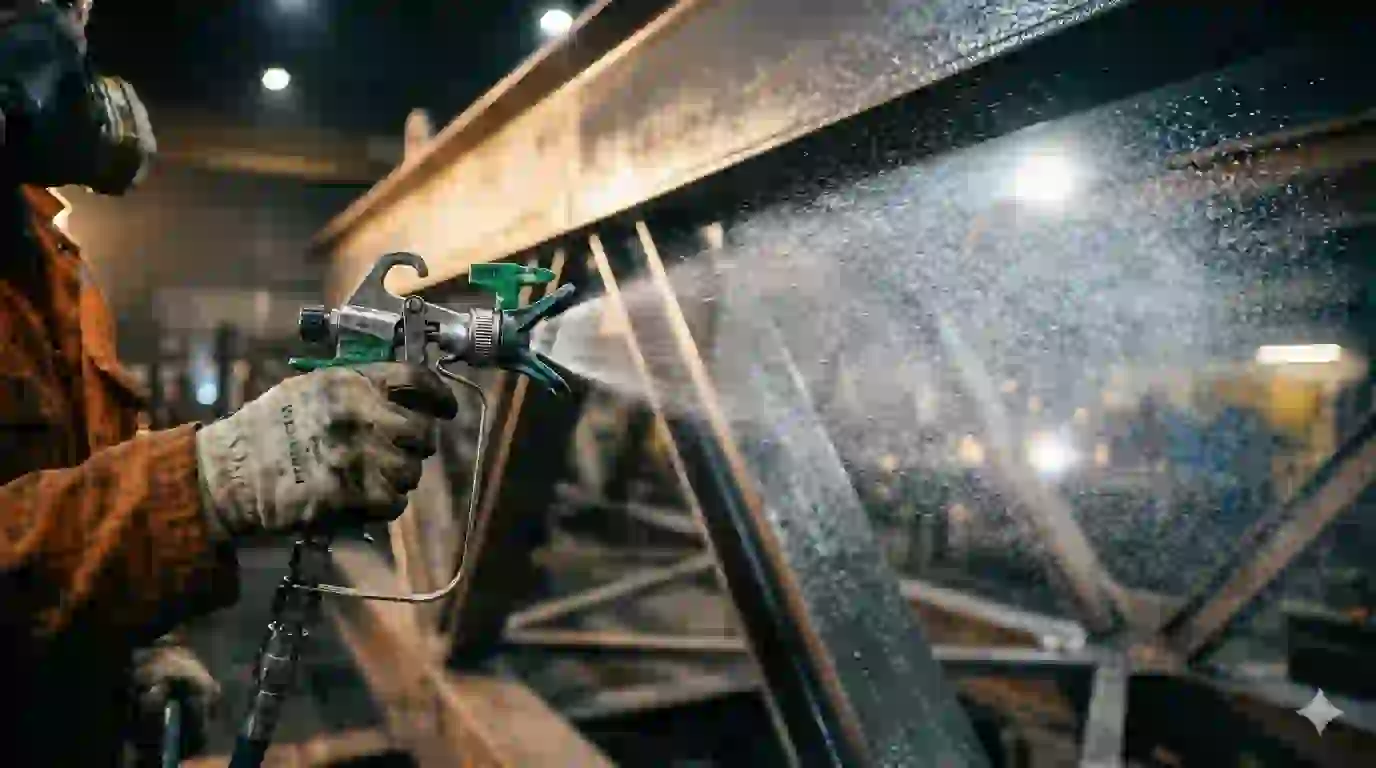
Operator Skill is More Important Than Machine
One thing is very clear in real work:
A good operator makes more difference than the machine.
Basic skills every painter must have:
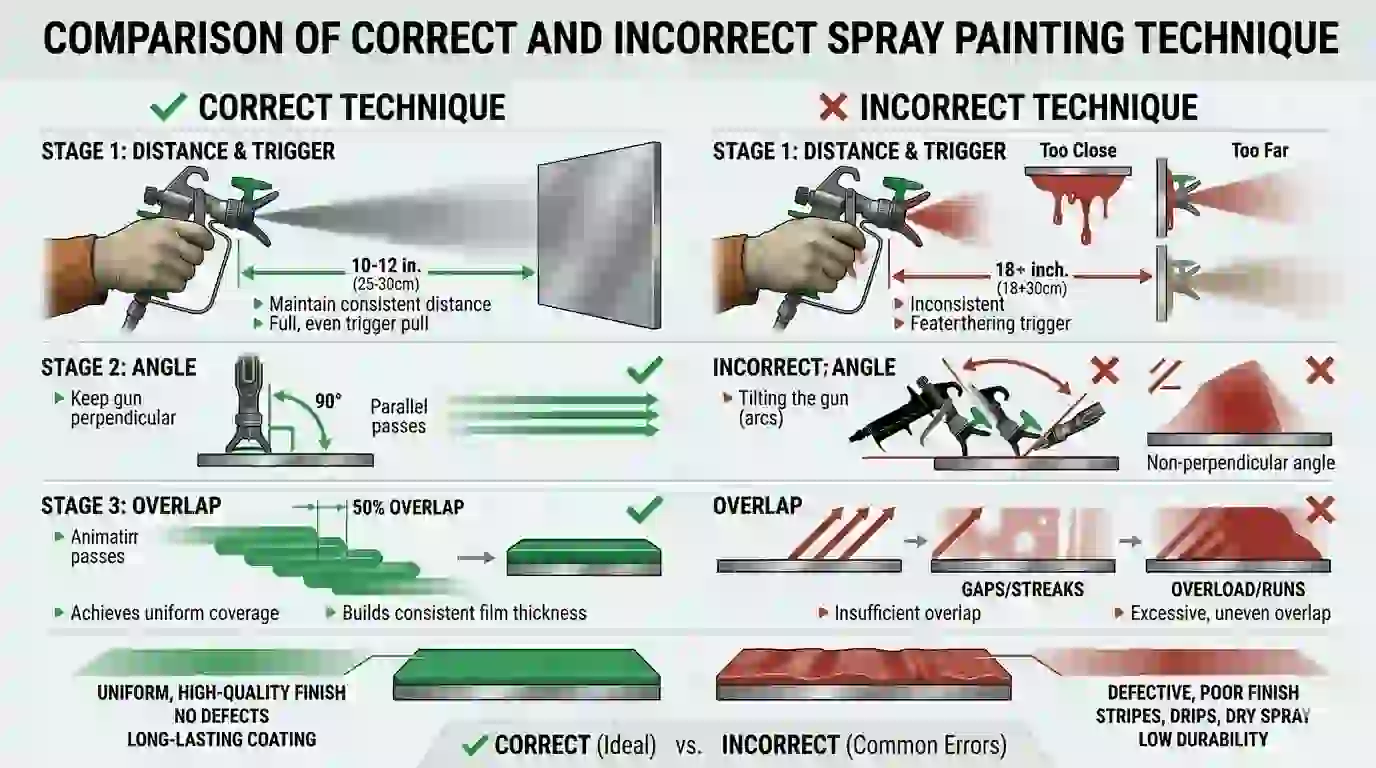
- Keep correct gun distance (300–400 mm)
- Maintain consistent speed
- Keep around 50% overlap
- Start moving before pulling trigger
- Understand coating behavior (like viscosity and sagging)
Advanced skills:
- Reading wet film
- Adjusting pressure
- Identifying defects quickly
In real projects, trained applicators always give better and more consistent results.
Spray Tip – The Most Important Part
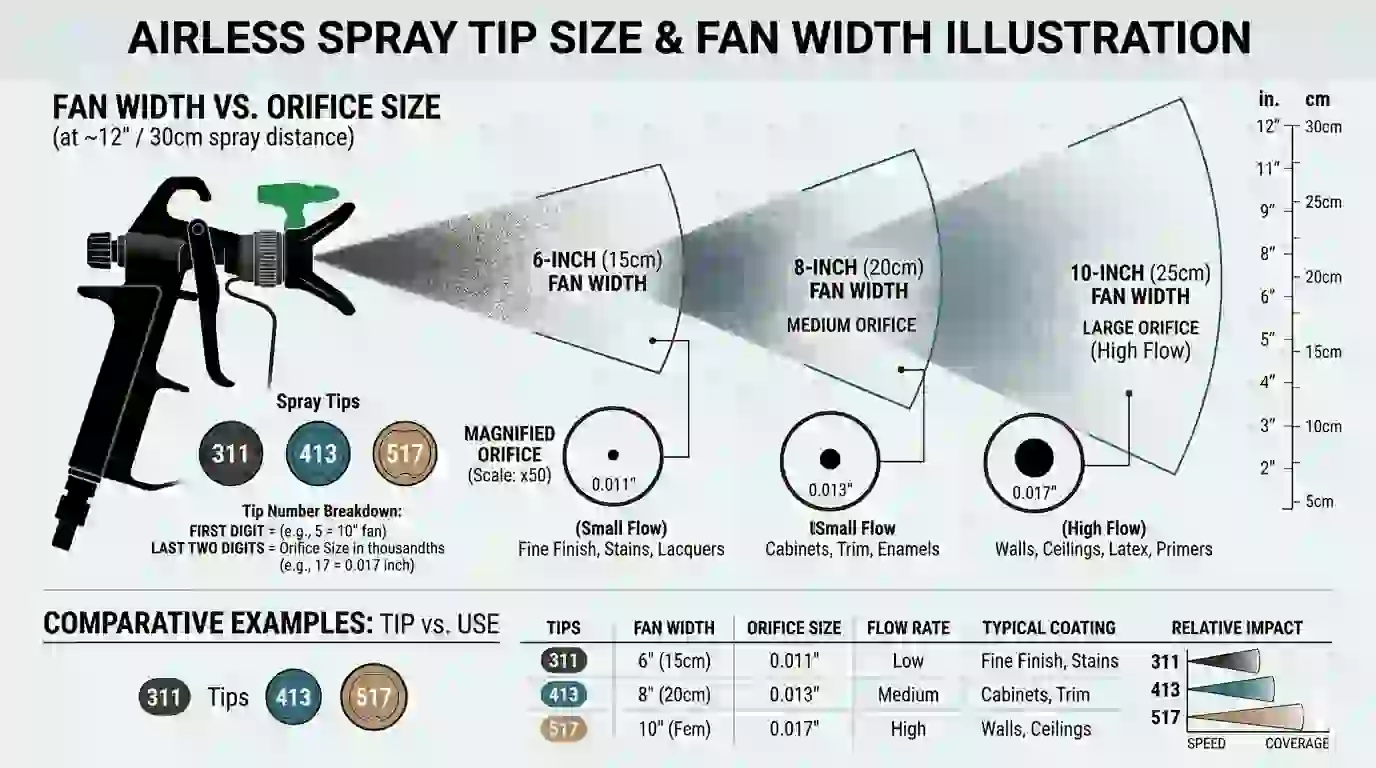
The spray tip controls everything.
Spray tip = pattern + flow control
Example: Tip 517
- 5 = fan width (10 inches at 30 cm)
- 17 = orifice size (0.017 inch)
What spray tip controls:
- Fan width
- Paint flow
- Spray quality
How to Select the Correct Spray Tip
Choosing the right spray tip is very important. Here is one tool that will help to chose the correct tip size.
Based on coating type:
- Thin paint → 0.011 – 0.015
- Epoxy → 0.015 – 0.021
- High build coating → 0.019 – 0.025
- Zinc-rich coating → 0.017 – 0.023
- Fireproofing → 0.025+
Based on surface:
- Large flat surface → wide fan (517, 519)
- Small or complex → narrow fan (311, 413)
Simple rule:
- Too small tip → poor flow, dry spray
- Too large tip → sagging, wastage
Common Airless Spray Painting Mistakes
These are very common in site work:
- Wrong distance
- Too close → sagging
- Too far → rough finish
- Arcing movement
- Causes uneven thickness
- No overlap
- Creates stripes
- Triggering at one place
- Paint build-up
- Wrong tip selection
- Poor spray and more paint use
Correct Body Position for Spray Painting
Body position is very important for good finish.
Correct way:
- Stand parallel to surface
- Move full arm (not only wrist)
- Keep same distance
- Hold gun at 90°
But in real work:
Sometimes conditions are not perfect.
When working at height or tight areas, you may need to adjust your wrist or angle. A good painter knows how to control this without affecting quality.
What Happens If Spraying is Done Wrong?
Surface problems:
- Runs and sagging
- Dry spray (rough surface)
- Pinholes or holidays
- Uneven thickness
Cost problems:
- Rework
- Wasted material
Real Industry Insight
From practical experience:
Most coating failures are not because of paint.
They happen because of the applicator.
A skilled spray painter:
- Understands the machine
- Knows the coating
- Even understands how weather can affect the job
Conclusion – Airless Spray Painting
Airless spray painting is simple in concept but depends heavily on skill. The machine helps, but the final result is always in the hands of the painter.
If you focus on correct technique, right spray tip, and avoid common mistakes, you will get good coating quality every time.
FAQs (Frequently Asked Questions)
-
What is airless spray painting used for?
It is used for fast coating application, especially for epoxy, PU, and heavy coatings.
-
What pressure is used in airless spray painting?
Usually between 1500 to 3000 psi.
-
Why is spray tip important?
It controls spray pattern, paint flow, and finish quality.
-
What happens if I use the wrong spray tip?
It can cause dry spray, sagging, or paint wastage.
-
What is the correct spray distance?
Normally 300–400 mm from the surface.
-
Why is overlap important?
It helps to get even coating thickness and avoid stripes.
-
Is machine more important or operator?
Operator is more important than the machine.
-
What is the main reason for coating failure?
Mostly wrong application, not paint quality.
Suggested Posts
3 LPE vs 3LPP Coating System – Complete Guide for Pipeline Coating
Coating vs. Painting: What’s the Difference?