
Introduction
Acoustic Insulation– Noise is one of the most common challenges in the oil and gas industry. Compressors, generators, pumps, turbines, and process piping operate continuously and generate high sound levels. If this noise is not controlled properly, it can affect worker health, communication, and overall site safety.
Acoustic insulation is the most reliable way to control industrial noise. However, effective noise control does not depend only on the insulation material. It depends on selecting the correct system, following the project specification, and applying the insulation using approved construction methods. This article explains acoustic insulation from a practical oil and gas perspective, covering materials, applications, and the correct installation methods used on real projects.
Materials, Applications, and Correct Installation Methods

Understanding Acoustic Insulation in Oil and Gas Facilities
Acoustic insulation is used to reduce the transmission of sound from noisy equipment to surrounding areas. In simple terms, it keeps noise close to its source and prevents it from spreading across the facility.
In oil and gas plants, acoustic insulation is required in areas where noise levels exceed permissible limits. These include generator rooms, compressor units, pump skids, process piping, and offshore modules. The objective is not complete silence but compliance with safety regulations and protection of personnel.
Insulation Materials Used in Oil and Gas Projects
Oil and gas environments demand insulation materials that can withstand high temperatures, fire risk, vibration, and long operating hours. For this reason, mineral-based insulation materials are most commonly used.
Rockwool and mineral wool are preferred because they absorb sound effectively while also providing thermal insulation and fire resistance. These materials reduce sound by trapping sound waves within their fiber structure, converting sound energy into low-level heat.
Other materials, such as acoustic foam, are used only in controlled indoor spaces like control rooms. In open industrial areas, materials must meet strict fire and safety requirements defined in the project specification.
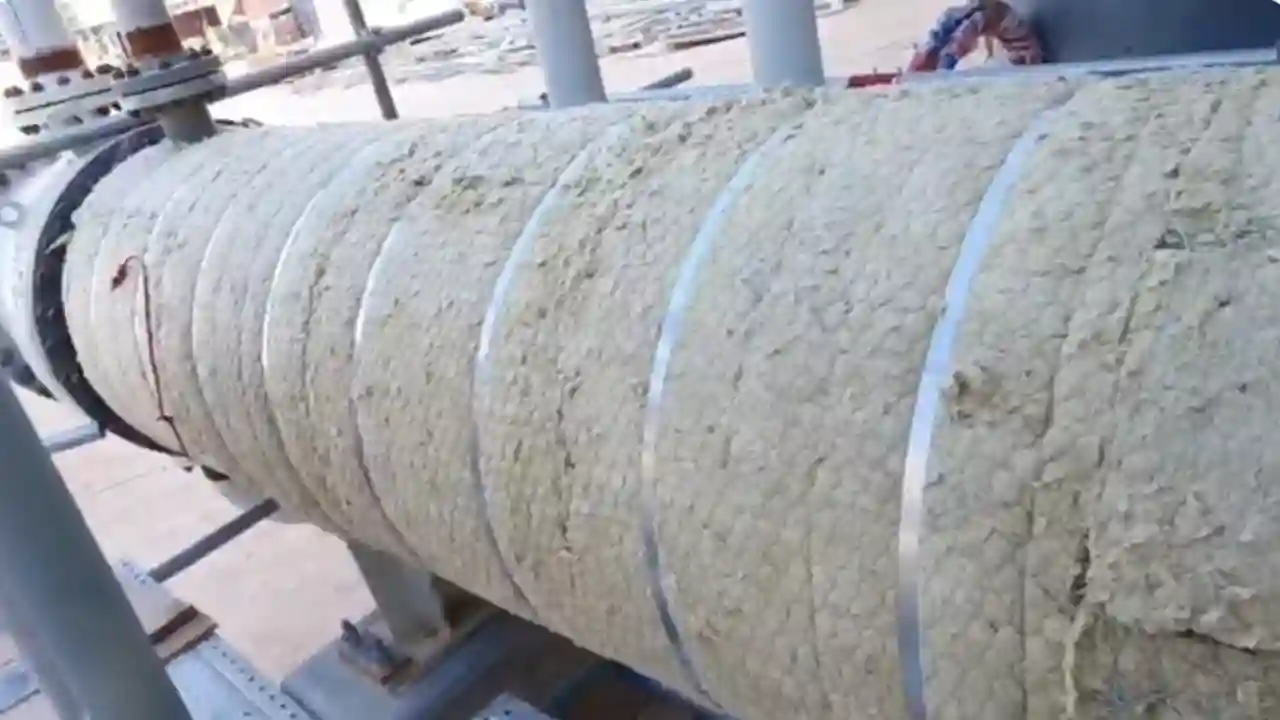
Rockwool Acoustic Insulation and Its Importance
Rockwool acoustic insulation is one of the most widely specified materials in oil and gas projects. It is manufactured from natural stone and can withstand very high temperatures without burning or releasing toxic smoke.
Because Rockwool provides sound absorption, thermal insulation, and fire protection, it is commonly used on piping systems, vessels, equipment enclosures, and building panels. Its durability and long service life make it suitable for harsh environments, including offshore facilities.
Even when Rockwool is specified, the correct density, thickness, and insulation class must be selected as per the project specification. Using an incorrect grade, even of the same material, can result in non-compliance during inspection.
Thermal Acoustic Insulation in Process Plants
Most noise sources in oil and gas facilities also generate heat. Thermal acoustic insulation is designed to manage both problems simultaneously.
This type of insulation is commonly applied to hot piping, vessels, and rotating equipment. It reduces surface temperature, minimizes heat loss, and lowers noise emission. This improves energy efficiency and protects workers from burns and prolonged noise exposure.
As with all insulation systems, the insulation class, temperature rating, and construction details must match the project specification. Following the specification is the correct method to avoid any specification violations.
Acoustic Insulation Boards for Buildings and Control Rooms
Acoustic insulation boards are mainly used in enclosed areas such as control rooms, MCC rooms, electrical rooms, and operator cabins. These boards reduce reflected noise and improve speech clarity, which is critical for safe operation.
In oil and gas facilities, acoustic boards are usually protected with metal facing to prevent damage. The insulation inside the board must meet fire and acoustic performance requirements defined in the project documents.
Role of Acoustic Insulation Foam
Acoustic insulation foam is effective for reducing echo and improving sound quality, but it is not suitable for heavy industrial noise control. Its use in oil and gas projects is limited to safe indoor areas where fire-rated foam is approved by the specification.
Using non-approved foam materials is a common cause of safety non-conformances and should be avoided.
Best Acoustic Insulation for Oil and Gas Applications
There is no single solution that fits all applications. The best acoustic insulation depends on noise level, operating temperature, location, and safety requirements.
In most oil and gas projects, Rockwool-based systems combined with vinyl sound barriers and metal cladding provide the most effective and compliant solution. Final selection must always be based on approved specifications, datasheets, and material submittals.
Common Insulation Application Methods in Oil and Gas Industry
Correct installation is as important as material selection. The following are two widely accepted acoustic insulation application methods used in oil and gas projects.
Method 1: Multilayer Mineral Wool and Vinyl Barrier System (Most Common Method)
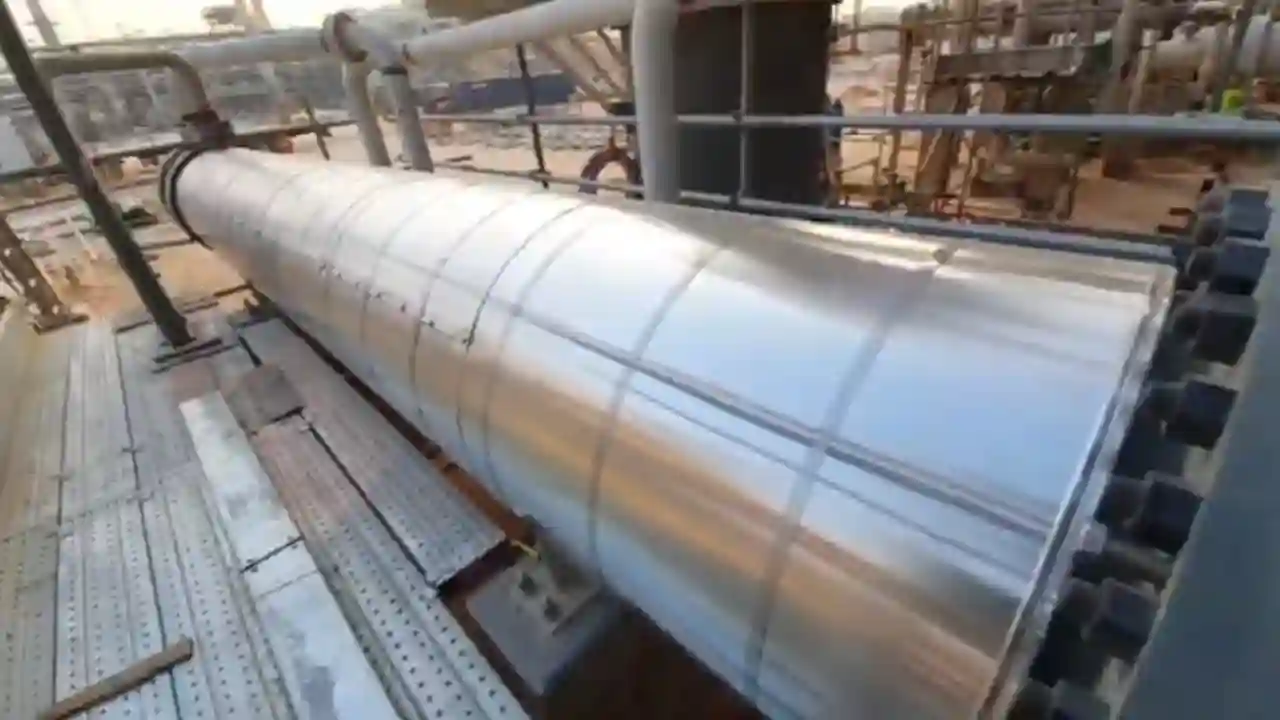
The first and most common method of acoustic insulation application in the oil and gas industry is the multilayer mineral wool and vinyl barrier system. This method is typically used for piping, vessels, and noisy equipment where high sound reduction is required.
After coating application, surface preparation is carried out to ensure the coated surface is clean, dry, and free from damage. Any coating defects must be repaired before insulation work begins.
The first layer of mineral wool is then applied in accordance with the project specification, ensuring correct thickness and density. A 1 mm thick vinyl sound barrier sheet is installed over the mineral wool to block sound transmission.
A second layer of mineral wool is applied over the vinyl sheet, followed by another 1 mm thick vinyl sound barrier. This layered system significantly improves acoustic performance.
The system is completed with metal cladding, usually aluminum or stainless steel, as specified. At all terminations, joints, and penetrations, butyl rubber or glass cloth is used to seal gaps and prevent sound leakage.
This method is considered the most effective and widely accepted acoustic insulation system in oil and gas projects.
Method 2: Acoustic Insulation for Equipment Enclosures and Buildings
The second common method is used for generator enclosures, compressor buildings, and other enclosed structures.
After surface preparation, mineral wool or Rockwool insulation is installed on the inner side of walls and panels using approved fixing methods. A 1 mm thick vinyl sound barrier is then applied over the insulation to reduce airborne noise transmission.
In high-noise areas, an additional layer of mineral wool may be installed, depending on the project specification. The insulation system is finished with perforated metal sheets or solid panels as specified.
All joints, corners, door frames, and penetrations are sealed using butyl rubber or glass cloth to prevent sound leakage. Particular attention is given to ventilation openings, which are common noise paths.
Importance of Following Project Specifications
Every oil and gas project has specific insulation requirements defined in the project specification. These include insulation class, material type, thickness, fire rating, and installation details.
Reading and understanding the project specification before starting work is the correct professional approach. Following the specification is the only way to avoid non-conformance reports, rework, and specification violations.
Acoustic Insulation as a Safety and Compliance Requirement
Uncontrolled noise can cause hearing loss, fatigue, and increased accident risk. Acoustic insulation helps facilities comply with HSE requirements and international noise standards.
Properly designed and correctly installed acoustic insulation protects workers and supports safe, efficient plant operation.
Conclusion
Acoustic insulation is a critical element of oil and gas facility design and construction. It reduces noise, protects workers, and ensures compliance with safety standards.
Using proven materials such as Rockwool and thermal acoustic insulation systems, combined with correct application methods and strict adherence to project specifications, ensures effective and reliable noise control. In oil and gas projects, the right material applied in the right way, according to the specification, is the key to successful acoustic insulation.
Frequently Asked Questions (FAQs)
What is acoustic insulation used for in oil and gas?
To reduce noise from equipment and protect workers.
Why is Rockwool commonly specified?
Because it provides sound absorption, fire resistance, and thermal insulation.
Can thermal insulation also reduce noise?
Yes, thermal acoustic insulation controls both heat and sound.
Is acoustic foam suitable for industrial areas?
Only in approved indoor locations and when fire-rated.
What is the most common acoustic insulation system?
Multilayer mineral wool with vinyl sound barriers and metal cladding.
Why is vinyl sheet used in acoustic systems?
It adds mass and significantly reduces sound transmission.
Why must project specifications be followed?
To ensure safety, performance, and compliance during inspection.
Can acoustic insulation be installed on existing plants?
Yes, it is often added during retrofitting and upgrades.
Suggested Posts
20 Oil and Gas Interview Questions and Answers for Insulation Supervisors