
Pipelines are used to carry water, oil, and gas from one place to another. These pipelines are made of steel, and steel can get rust very easily if it is not protected. To stop corrosion, special coating systems are used. Two of the most common coating systems are 3LPE (Three Layer Polyethylene) and 3LPP (Three Layer Polypropylene).
Both coating systems have three layers: FBE (Fusion Bonded Epoxy), adhesive, and outer layer. These layers protect the steel pipe from damage, moisture, and chemicals. But both coatings are used in different temperature conditions.
In this article, we will explain the difference between 3 LPE vs 3LPP Coating System in very simple English. You will learn about layers, temperature limits, thickness, surface preparation, inspection methods, and where these coatings are used.
What is 3LPE Coating System?
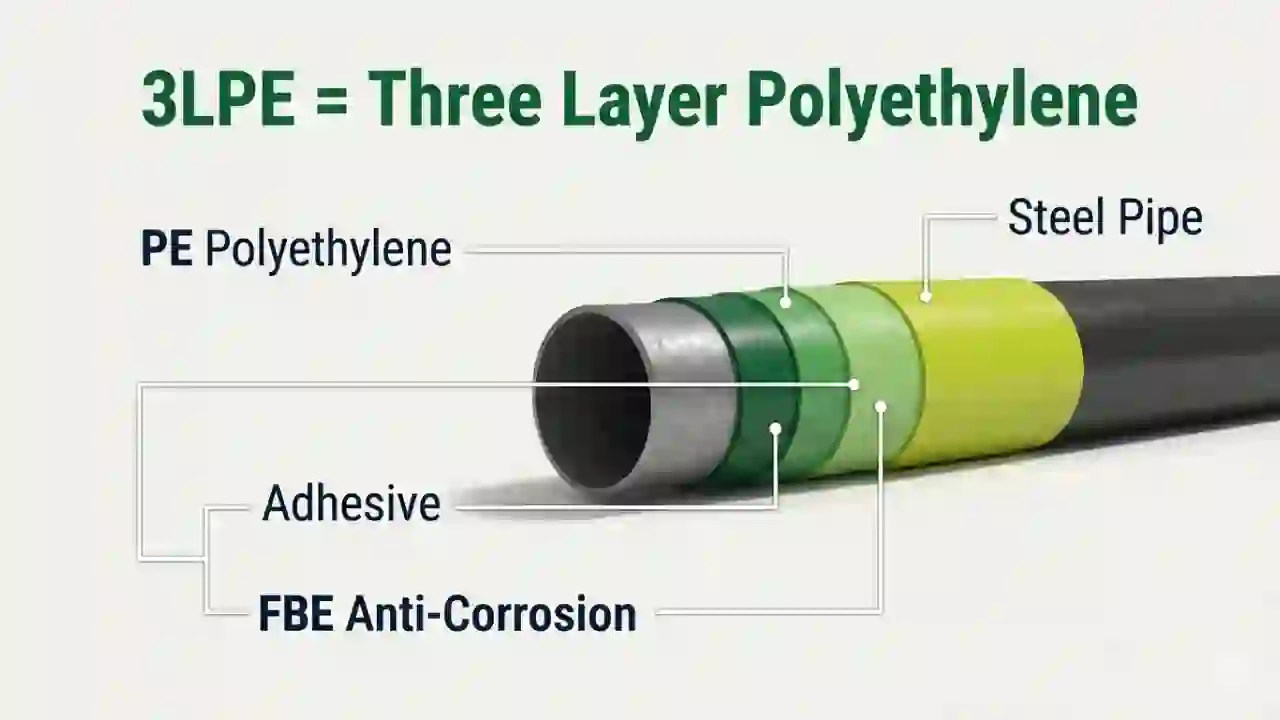
3LPE (Three Layer Polyethylene) is a coating used for protecting steel pipelines from corrosion.
Layers in 3LPE:
- FBE (Fusion Bonded Epoxy) – Anti-corrosion layer
- Adhesive Layer – Bonds coating layers
- PE (Polyethylene) – Outer protective layer
Temperature Limit:
- Normal temperature ≤ 80°C
Example:
- Underground water pipelines
What is 3LPP Coating System?
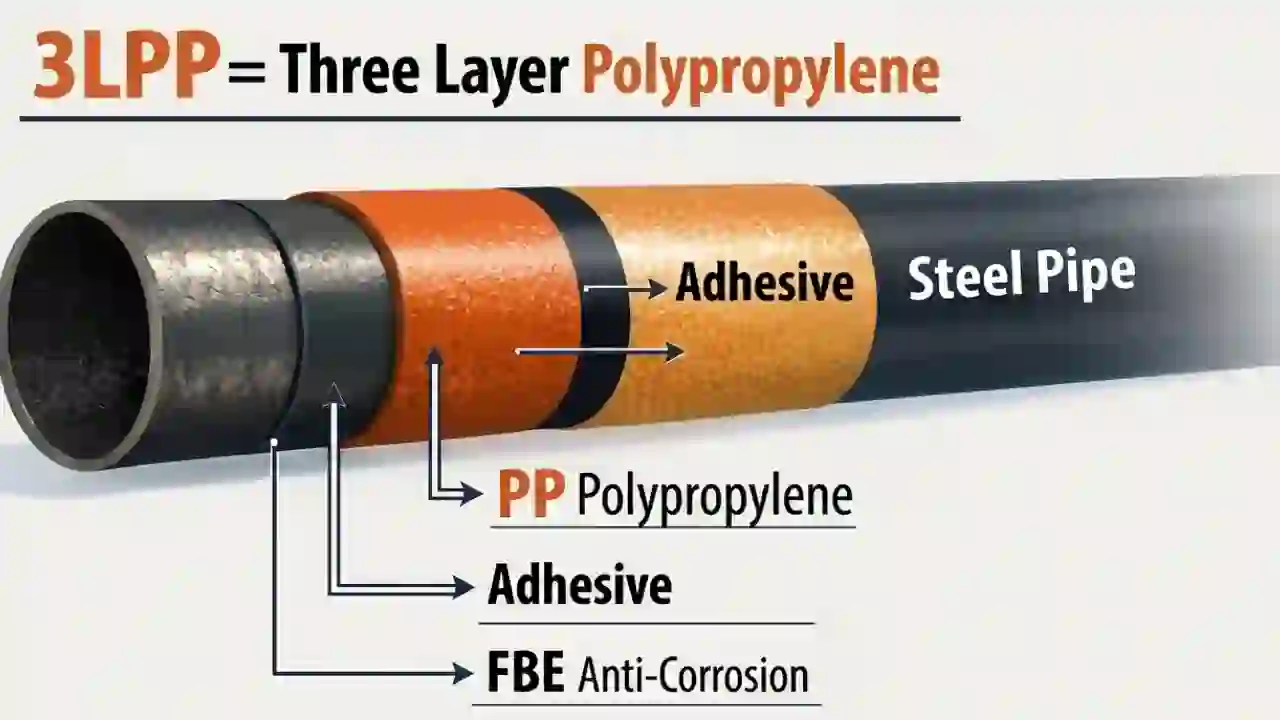
3LPP (Three Layer Polypropylene) is used when pipelines operate at higher temperatures.
Layers in 3LPP:
- FBE (Fusion Bonded Epoxy)
- Adhesive Layer
- PP (Polypropylene)
Temperature Limit:
- High temperature ≤ 140°C
Example:
- Hot oil pipelines
Key Difference: 3 LPE vs 3LPP Coating System
| Feature | 3LPE | 3LPP |
| Full Form | Three Layer Polyethylene | Three Layer Polypropylene |
| Outer Layer | PE (Polyethylene) | PP (Polypropylene) |
| Temperature | ≤ 80°C | ≤ 140°C |
| Application | Normal temperature | High temperature |
| Example | Underground water pipeline | Hot oil pipeline |
Coating Thickness & Test Values
FBE: 200–300 µm
- Adhesive: 200–300 µm
- PE (3LPE): 2.0 – 3.0 mm
- PP (3LPP): 2.0 – 3.5 mm
- Holiday Test: 5 – 25 kV
Surface Preparation
Before coating, the pipe must be properly cleaned.
Steps:
- Remove oil and grease
- Shot blasting – SA2.5 or SA3
- Achieve clean metal surface
Important Point:
- Surface should be very clean for coating to stick properly
Inspection Methods
✅ 1. Surface Cleaning Check
- Ensure no dust, oil, or rust
✅ 2. Layer Thickness Check
- Check thickness of each layer
✅ 3. Holiday (Spark) Test
- Detect pinholes or coating damage
Acceptance Requirements
For coating to be accepted:
- Surface must be clean
- Coating thickness must match required values
- No holidays (pinholes)
- Proper bonding between layers
Where These Coatings Are Used
3LPE Used In:
- Underground pipelines
- Water pipelines
- Normal temperature conditions
3LPP Used In:
- Hot oil pipelines
- High temperature pipelines
- Example: Crude oil pipeline (~130°C)
👉 Both coatings are mainly used for external/Internal pipeline protection
Conclusion
Both 3LPE and 3LPP coating systems are used to protect pipelines from corrosion. The main difference is temperature. 3LPE is used for normal temperature pipelines up to 80°C, while 3LPP is used for high temperature pipelines up to 140°C.
3LPE is commonly used for underground water pipelines, while 3LPP is used for hot oil pipelines. Choosing the correct coating is very important for safety and long life of pipelines.
FAQs – 3 LPE vs 3LPP Coating System
1. What is 3LPE coating used for?
It is used for underground and water pipelines at normal temperature.
2. What is 3LPP coating used for?
It is used for high temperature pipelines like hot oil pipelines.
3. What is the temperature limit of 3LPE?
Up to 80°C.
4. What is the temperature limit of 3LPP?
Up to 140°C.
5. What tests are done in coating inspection?
Surface cleaning, thickness check, and holiday (spark) test.
Suggested Posts
Painting Inspection Standards (ISO, ASTM, SSPC, NACE) – Complete Guide for QA/QC Engineers
Internal Pipe Coating | A Simple and Complete Guide for Beginners
Welding Interview Questions: Top 50 Questions and Answers for Freshers & Experienced